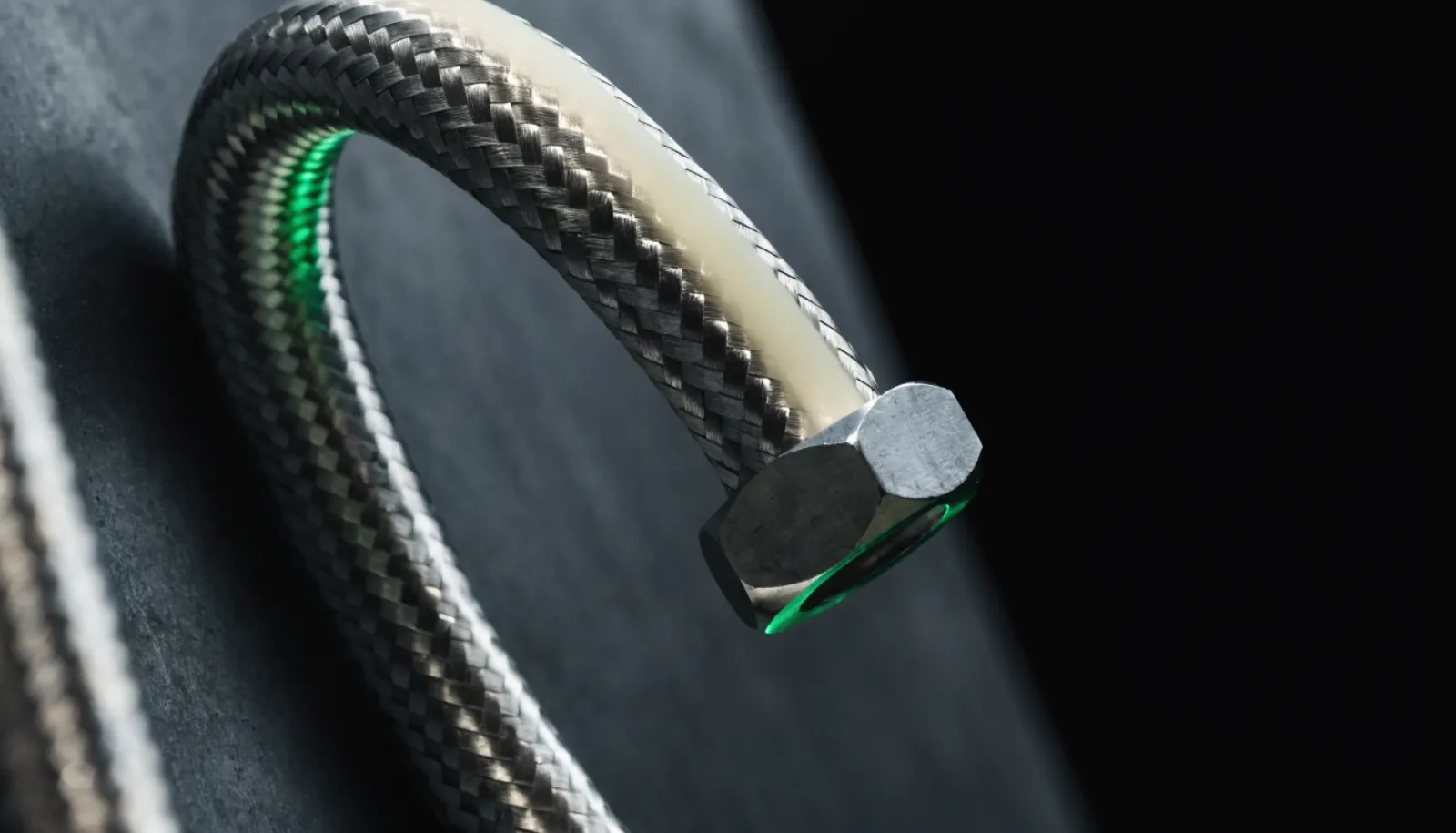
Industrial hose PTFE lined stainless steel braid assemblies solve fluid transfer challenges where conventional hoses fail. These assemblies combine a smooth-bore polytetrafluoroethylene core with stainless steel overbraid reinforcement, delivering chemical inertness across virtually all industrial fluids, thermal stability from -200°C to +260°C, and pressure ratings up to 300 bar. Chemical engineers and procurement managers specify these assemblies for aggressive media, temperature cycling and dimensional stability requirements that exceed elastomeric hose capabilities. This guide examines SAE 100R14 performance standards, material construction advantages, industry-specific applications and compliance requirements for mission-critical installations.
SAE 100R14 Specifications and Performance Standards
SAE 100R14 defines the industry benchmark for PTFE-lined hydraulic hose assemblies with stainless steel braid reinforcement. The standard specifies smooth-bore PTFE construction with single or double stainless steel wire braid, temperature range from -54°C to 232°C, and working pressures between 1,000 and 3,000 psi depending on hose diameter. According to Swagelok's T-Series specifications, assemblies feature 304 stainless steel overbraid with 316 stainless steel end connections for enhanced corrosion resistance at termination points.
The smooth-bore requirement ensures consistent internal diameter throughout the hose length, eliminating turbulence and pressure drop that occurs with convoluted designs. This dimensional stability matters in pharmaceutical dosing systems and analytical instrumentation where flow rate precision affects product quality. ASTM D3295 complements SAE 100R14 by establishing test methods for PTFE resin purity, dimensional tolerances and permeation resistance—parameters that directly impact service life in chemical processing environments.
Pressure ratings decrease as hose diameter increases due to reduced wall thickness relative to internal volume. A 1/4-inch industrial hose PTFE lined stainless steel braid typically handles 3,000 psi working pressure, while 3/4-inch assemblies rate at 1,000 psi. Engineers must calculate safety factors based on surge pressure, temperature excursions and chemical compatibility rather than relying solely on nominal ratings. The FITOK product line demonstrates this sizing relationship across multiple diameters with corresponding pressure de-ratings.
Burst pressure specifications require four-times working pressure minimum, verified through hydrostatic testing at ambient temperature. Thermal cycling between cryogenic and elevated temperatures introduces material fatigue not captured in static burst tests. Advanced Fluoro's adherence to SEMI F57 standards addresses this gap for semiconductor and specialty chemical applications where thermal shock occurs routinely during batch processing.
Material Advantages: PTFE Core and Stainless Steel Braid Construction
PTFE exhibits chemical inertness to virtually all industrial fluids including concentrated sulfuric acid, sodium hydroxide, chlorinated solvents and oxidizing agents that rapidly degrade elastomeric hoses. The fluoropolymer's carbon-fluorine backbone creates exceptional bond strength, preventing molecular degradation even during prolonged exposure to aggressive media. Aeroflex Industries documentation confirms PTFE maintains stable physical and chemical properties across its full temperature range without plasticizer migration or polymer chain scission.
The smooth bore construction reduces friction coefficient to 0.05-0.10, significantly lower than rubber (0.80) or PVC (0.50). This surface characteristic prevents particle adhesion in pharmaceutical slurry transfer and minimizes pressure drop in long hose runs. Cleaning validation becomes straightforward since residues do not bond to the PTFE surface—critical for multi-product facilities where cross-contamination risks require thorough cleaning between batches. For detailed comparisons of smooth versus convoluted designs, see our smooth bore vs convoluted PTFE hose analysis.
Stainless steel braid reinforcement serves multiple engineering functions beyond pressure containment. The braid maintains circular cross-section during flexing, preventing the kinking that causes flow restriction and premature failure. It provides electromagnetic shielding in electrical environments and dissipates static charges when grounded properly—essential for flammable solvent transfer. The braid also protects the PTFE core from mechanical damage during installation and service.
Material selection between SS304 and SS316 braid depends on chloride exposure levels. SS316 contains 2-3% molybdenum, improving pitting resistance in marine environments and chlorinated chemical processes. Pharmaceutical facilities processing saline solutions or coastal chemical plants benefit from SS316 construction despite higher material costs. The virgin-grade PTFE resin Advanced Fluoro employs ensures FDA 21 CFR 177.1550 compliance for pharmaceutical and food-grade applications.
Applications Across Chemical, Pharmaceutical and Oil & Gas Industries
Chemical processing plants deploy industrial hose PTFE lined stainless steel braid assemblies for acid and caustic transfer, solvent delivery to reactors, and corrosive waste handling. The material combination withstands concentrated sulfuric acid at elevated temperatures, hydrofluoric acid etching solutions, and chlorinated hydrocarbon streams that dissolve conventional hose materials within hours. Aflex hose assemblies specifically target chemical processing applications where process reliability and leak-free operation directly impact production uptime and worker safety.
Pharmaceutical manufacturing requires hoses that meet stringent purity standards while handling active pharmaceutical ingredients, cleaning solutions and sterilization media. PTFE's non-reactive surface prevents drug product contamination, while smooth bore construction enables validated cleaning procedures. Biopharmaceutical facilities processing cell cultures and protein solutions demand USP Class VI biocompatibility certification, confirming materials do not leach cytotoxic compounds. The ability to withstand repeated steam-in-place sterilization cycles at 121°C without dimensional change makes these assemblies suitable for aseptic processing environments. Our PTFE medical tubing guide explores pharmaceutical-specific requirements in greater depth.
Oil and gas operations utilize these hose assemblies for hydraulic control systems, chemical injection lines and sampling applications on offshore platforms and refineries. The temperature extremes encountered in wellhead operations—from cryogenic natural gas to high-temperature crude oil—exceed the capabilities of elastomeric hoses. PTFE maintains flexibility at -200°C for liquefied gas handling while resisting thermal degradation at +260°C in hot oil service. The stainless steel braid provides mechanical strength against vibration and pressure surges common in reciprocating pump installations.
Automotive testing laboratories and racing applications employ industrial hose PTFE lined stainless steel braid for brake fluid systems and fuel delivery. DME Racing specifications highlight the performance advantages in high-temperature brake systems where conventional rubber hoses expand under pressure, causing spongy pedal feel.
Compliance Standards and Certification Requirements
FDA 21 CFR 177.1550 certification establishes material requirements for PTFE resins in food contact and pharmaceutical applications. This regulation specifies extractable limits, ensuring no harmful substances leach into products during processing or storage. Pharmaceutical manufacturers and food processors must verify this certification before specifying hoses for product-contact service. Advanced Fluoro's use of virgin-grade fluoropolymer resin ensures compliance without the contamination risks associated with reprocessed materials.
USP Class VI biocompatibility testing evaluates material cytotoxicity through in vivo and in vitro methods, confirming suitability for pharmaceutical and medical device applications. This testing protocol subjects materials to various extraction conditions, then assesses biological response in standardized test systems. Biopharmaceutical facilities producing injectable drugs require this certification to meet regulatory agency expectations during facility inspections. The certification applies to the complete hose assembly—PTFE core, stainless steel braid and end fittings—not just individual components.
ISO 1307 and EN 12115 standards govern hose construction, testing methods and performance specifications for industrial applications. These international standards establish dimensional tolerances, minimum bend radius requirements and pressure test protocols that ensure consistent quality across manufacturers. For applications requiring electrostatic discharge protection, see our conductive PTFE hoses guide.
SEMI F57 addresses the semiconductor industry's unique requirements for ultra-high-purity chemical delivery systems. This standard specifies particle generation limits, metallic contamination levels and outgassing characteristics critical for wafer fabrication processes. The standard's thermal cycling test protocol—repeated exposure to temperature extremes—validates hose performance under conditions that cause premature failure in assemblies meeting only basic SAE 100R14 requirements.
Advanced Fluoro's Extended Temperature and Pressure Capabilities
Advanced Fluoro's industrial hose PTFE lined stainless steel braid assemblies extend beyond standard SAE 100R14 specifications with temperature capability from -200°C to +260°C and pressure ratings up to 300 bar. This expanded performance envelope addresses applications where conventional hoses fail—cryogenic liquefied gas transfer, high-temperature thermal oil systems and extreme-pressure hydraulic circuits. The -200°C lower limit enables liquefied nitrogen, oxygen and natural gas handling without embrittlement, while +260°C capability accommodates superheated steam and hot polymer melt transfer.
The 300 bar (4,350 psi) pressure rating exceeds typical SAE 100R14 specifications by 45-135% depending on hose diameter, providing safety margin for systems with pressure surges or water hammer conditions. This enhanced pressure capability results from precision extrusion processes that maintain consistent wall thickness and eliminate weak points where failure initiates.
Custom dimension capabilities distinguish Advanced Fluoro from catalog suppliers offering fixed size ranges. Precision-extruded PTFE tubes accommodate non-standard inside diameters, wall thicknesses and length requirements that optimize system design. Instrumentation applications requiring specific flow rates achieve target performance through custom bore sizing rather than flow restrictors that introduce pressure drop. Our custom dimension PTFE tubes article details the engineering precision behind these capabilities.
ISO 9001:2015 certification demonstrates Advanced Fluoro's quality management system meets international standards for design, manufacturing and testing processes. This certification provides procurement managers assurance that documented procedures control material traceability, dimensional inspection and pressure testing throughout production. Combined with material certifications and test reports, ISO 9001:2015 registration streamlines the procurement process for critical applications.
Manufacturing location in Vasai East, Mumbai positions Advanced Fluoro to serve the Indian chemical processing, pharmaceutical and oil refining industries with shorter lead times than international suppliers. Local technical support enables rapid application engineering assistance and custom solution development. Browse our product range to compare standard and custom configurations, or explore technical resources addressing specific application challenges in your industry.
How to Choose the Right Industrial Hose Assembly
Select industrial hose PTFE lined stainless steel braid assemblies by first identifying the most aggressive chemical, highest temperature and maximum pressure your system will encounter. Cross-reference these parameters against manufacturer specifications, ensuring adequate safety margin—typically 25% for pressure and 10°C for temperature. Verify that chemical resistance data covers your specific media concentration and temperature combination.
Evaluate end connection requirements based on existing equipment interfaces and installation constraints. Threaded fittings provide field-replaceable connections but require proper thread sealant compatible with process media. Flanged connections suit high-vibration applications where threaded joints may loosen. Sanitary tri-clamp fittings enable tool-free assembly and disassembly for pharmaceutical applications requiring frequent cleaning validation.
Consider bend radius and flexibility requirements for your installation space. Smooth-bore PTFE hoses require larger minimum bend radius than convoluted designs—typically 10-12 times the hose outside diameter versus 3-4 times for convoluted. Calculate total hose length including bend allowances to avoid kinking during installation, which creates stress concentration points leading to premature failure.
Verify compliance certifications match your industry requirements before finalizing specifications. Pharmaceutical applications demand FDA 21 CFR 177.1550 and USP Class VI documentation. Food processing requires 3-A Sanitary Standards compliance. Semiconductor chemical delivery systems need SEMI F57 certification. Request material test reports and certificates of conformance with each order to maintain traceability for regulatory audits. For applications involving volatile or flammable media, consult our static dissipative PTFE hose guide to evaluate electrostatic discharge protection requirements.
Compare lead times and minimum order quantities between standard catalog items and custom configurations. Standard sizes from stock inventory ship within days, while custom dimensions require manufacturing lead time. For critical applications where failure causes production downtime or safety incidents, specify assemblies with extended temperature and pressure capabilities beyond minimum requirements.

Article by
AFTubes Team
Savio Pereira is a Chemical Engineer who has held leadership roles in companies like IBM. A passionate problem solver who thrives at finding solutions to engineering and business problems alike using simple innovative ideas. He believes in doing things differently rather than doing different things. His vision is to make Advanced Fluro (P) Ltd the most valuable company in the fluouro polymer industry.