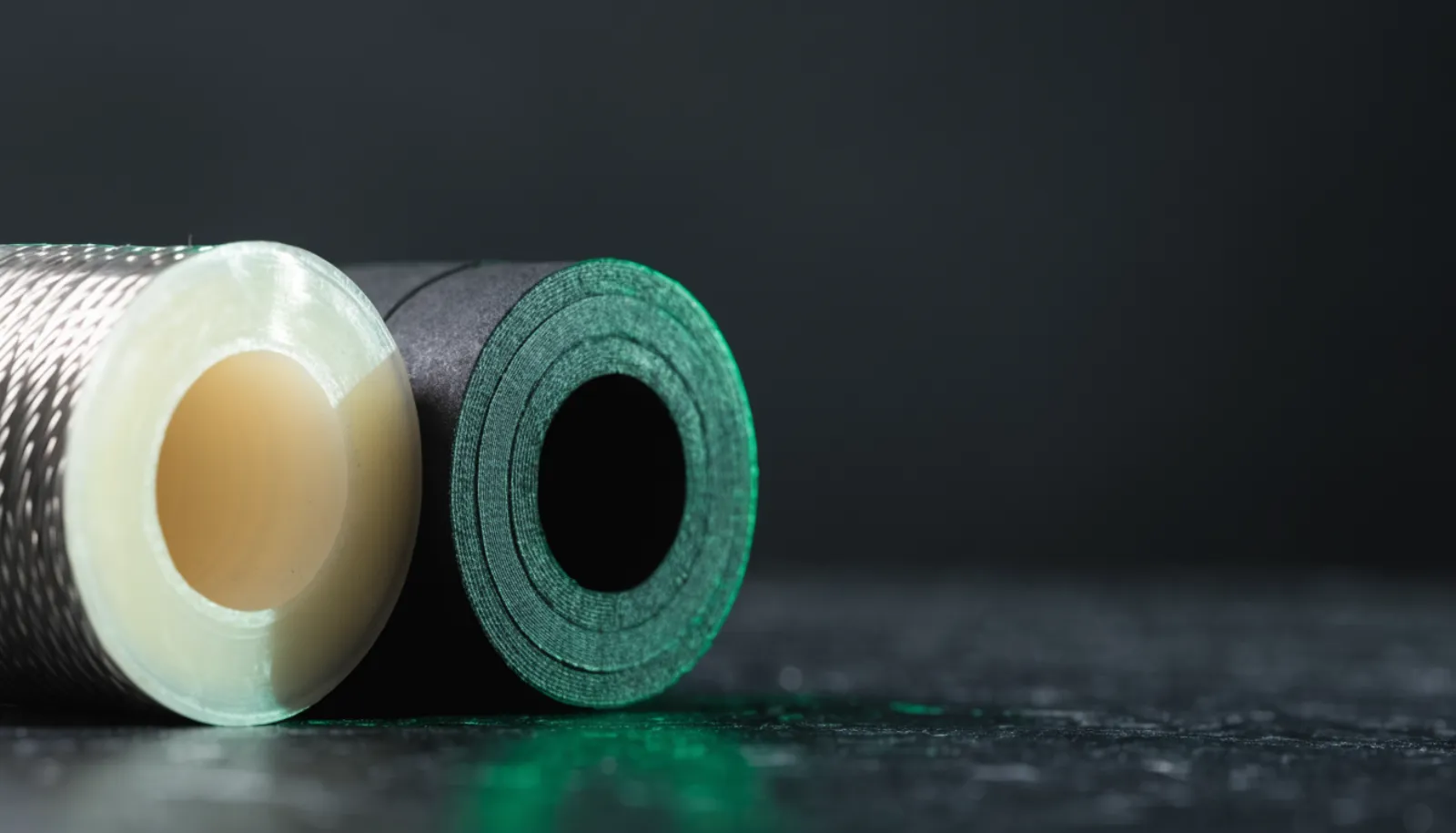
Selecting the right chemical hose material determines system reliability, safety, and long-term operating costs in industrial fluid transfer applications. The chemical hose PTFE vs rubber comparison centers on fundamental differences in chemical resistance, temperature capability, pressure ratings, and total cost of ownership. PTFE-lined hoses with stainless steel braiding deliver universal chemical compatibility and operate from -200°C to +260°C, while rubber hoses offer flexibility and lower initial cost but face significant limitations in aggressive chemical environments and elevated temperatures. This technical comparison examines performance specifications, regulatory compliance, and selection criteria for chemical processing, pharmaceutical manufacturing, and high-purity applications.
Temperature & Chemical Resistance: Why PTFE Outperforms Rubber
PTFE's molecular structure provides inherent advantages that rubber compounds cannot match across temperature extremes and chemical exposure. The fluoropolymer operates continuously from cryogenic temperatures of -200°C through +260°C without degradation, while rubber hoses typically function within -40°C to 120°C ranges. High-performance synthetic rubbers rarely exceed 150°C, and EPDM reaches 150°C maximum, Neoprene 120°C, and NBR (Nitrile) 120°C. Only specialized silicone rubber approaches PTFE's upper limit at 250°C, yet silicone lacks PTFE's universal chemical resistance.
Temperature-dependent chemical degradation poses the most critical limitation for rubber hoses in industrial service. Higher temperatures accelerate chemical attack on rubber compounds, and materials suitable at ambient conditions fail rapidly when exposed to elevated temperatures combined with aggressive chemicals. Excessive heat causes rubber to soften and lose elasticity, resulting in strength loss, leaks, and catastrophic ruptures.
PTFE's virtually universal chemical resistance stems from its inert fluoropolymer structure, which resists almost all industrial chemicals, strong acids, bases, and aggressive solvents. The non-reactive nature prevents liner degradation, fluid contamination, and swelling that plague rubber materials. Rubber chemical resistance depends entirely on the specific polymer type—Nitrile for petroleum products, EPDM for water and steam, Neoprene for moderate chemicals—yet no single rubber formulation handles the full spectrum of chemicals that PTFE manages without degradation. Rubber hoses can degrade when exposed to certain chemicals, severely limiting their use in chemical processing plants handling multiple fluid types.
The contamination risk differentiates PTFE in pharmaceutical and food applications. Some rubber compounds leach substances into transported fluids, creating quality control issues in high-purity systems. PTFE's non-toxic, FDA-compliant composition eliminates leaching concerns, making it the standard for pharmaceutical manufacturing and food processing where product purity cannot be compromised.
Pressure Ratings, Flow Characteristics & Performance Specifications
PTFE-lined hoses with stainless steel braiding typically achieve higher pressure ratings than rubber equivalents, with capabilities reaching 300 bar in properly constructed assemblies. The braided SS304 or SS316 reinforcement provides structural strength while the PTFE liner maintains chemical compatibility. Rubber hoses face pressure derating requirements as temperature increases—pressure ratings must be reduced 15-50% above 80°F depending on compound type and service conditions. This temperature-pressure relationship limits rubber hose performance in applications combining elevated temperatures with high system pressures.
Flow characteristics favor PTFE due to its exceptionally low coefficient of friction. The smooth PTFE bore minimizes pressure drop and turbulence, improving system efficiency and reducing pumping costs over the equipment's operational life. Rubber has high surface resistance that can reduce flow, requiring larger bore sizes or higher pumping pressures to achieve equivalent flow rates. The friction difference becomes significant in long hose runs or systems with multiple bends, where pressure losses accumulate.
Permeation resistance represents another critical performance specification. PTFE's dense molecular structure prevents chemical permeation, containing aggressive vapors and preventing environmental contamination or workplace exposure. Rubber can be permeated by some chemicals and release fumes, creating safety hazards in enclosed spaces and violating environmental regulations.
Flexibility presents the primary mechanical advantage for rubber hoses. Rubber compounds bend easily around tight radii, simplifying installation in confined spaces. PTFE hoses, particularly those with heavy stainless steel braiding, exhibit less flexibility and require larger bend radii to prevent kinking or liner damage. However, convoluted PTFE hose designs improve flexibility while maintaining chemical resistance.
Cost, Flexibility & Total Cost of Ownership Analysis
The initial purchase price clearly favors rubber hoses, with PTFE-lined assemblies typically costing two to four times more per meter than comparable rubber hoses. However, total cost of ownership analysis reveals that PTFE's longer service life, reduced maintenance requirements, and elimination of contamination-related production losses often justify the premium in demanding applications.
PTFE hoses in chemical processing environments routinely operate 5-10 years without replacement, while rubber hoses in similar service may require replacement every 1-3 years due to chemical degradation, temperature cycling, or permeation damage. The replacement cycle includes not only material costs but also labor for installation, system downtime during changeover, and disposal of failed hoses. In pharmaceutical manufacturing where production downtime costs thousands per hour, a single avoided failure event can offset the PTFE premium.
Contamination prevention delivers quantifiable value in regulated industries. Rubber hose failures that introduce particulates or leached compounds into pharmaceutical batches result in product rejection, regulatory investigations, and potential facility shutdowns. PTFE's inert liner eliminates this risk. For facilities operating under GMP regulations or producing high-value specialty chemicals, the contamination prevention alone justifies PTFE specification regardless of initial cost differences.
Installation flexibility remains rubber's practical advantage despite TCO considerations. The ease of routing rubber hoses around obstacles, through tight spaces, and around sharp bends reduces installation labor and minimizes the need for additional fittings or support structures. For applications involving frequent reconfiguration or temporary installations, rubber's flexibility provides operational advantages that may outweigh PTFE's durability benefits.
Industry Applications & Regulatory Compliance Standards
Chemical processing plants represent the primary application domain where PTFE demonstrates clear superiority over rubber alternatives. The industry's exposure to concentrated acids, bases, solvents, and reactive intermediates at elevated temperatures exceeds rubber's capability envelope. PTFE hoses are preferred in chemical processing units handling aggressive media, where material compatibility determines both safety and production reliability. Compliance with ASTM D3295 standards ensures dimensional consistency and performance verification for critical chemical transfer applications.
Pharmaceutical manufacturing demands the highest purity standards, making PTFE the default specification for active ingredient processing, sterile filling operations, and clean-in-place systems. The non-toxic, non-reactive properties meet FDA requirements for direct product contact, while the smooth bore facilitates complete drainage and cleaning validation. PTFE's suitability for pharmaceutical industries stems from its combination of universal chemical resistance, temperature capability for steam sterilization, and zero leaching characteristics. SEMI F57 compliance provides additional assurance for semiconductor and pharmaceutical applications requiring ultra-high-purity fluid transfer.
Oil and gas operations utilize PTFE hoses in applications involving sour gas, hydrogen sulfide, and corrosive drilling fluids where rubber compounds degrade rapidly. The temperature extremes encountered in wellhead operations, from cryogenic LNG transfer to high-temperature steam injection, exceed rubber's operational envelope. SAE 100R14 certification for PTFE hoses provides the pressure rating verification required for high-pressure hydraulic and chemical injection systems in offshore platforms and refinery operations.
Automotive applications increasingly specify PTFE for fuel systems, brake fluid transfer, and emissions control components. PTFE brake hoses resist degradation from modern biofuel blends and high-temperature brake fluids that attack conventional rubber materials.
Power generation facilities employ PTFE hoses in boiler feed systems, condensate return lines, and chemical injection systems where steam temperatures and aggressive water treatment chemicals exceed rubber's capabilities. The steel manufacturing sector similarly relies on PTFE for hydraulic systems, cooling water treatment, and pickling line applications where acid exposure and temperature cycling cause rapid rubber degradation.
How to Choose: Selection Criteria for Chemical Processing & Pharma
Temperature requirements provide the first decision criterion in the chemical hose PTFE vs rubber comparison. Applications operating continuously above 120°C or experiencing temperature cycling beyond rubber's range mandate PTFE specification. Cryogenic service below -40°C similarly eliminates rubber options, as most compounds become brittle and crack under extreme cold.
Chemical compatibility assessment requires detailed analysis of all fluids the hose will contact, including cleaning agents, sterilization media, and potential contamination from upstream processes. Universal chemical resistance makes PTFE the safe choice when fluid composition varies, when multiple chemicals pass through the same lines, or when future process changes may introduce new chemical exposures.
Pressure rating verification must account for temperature derating factors. A rubber hose rated for 150 bar at 20°C may only safely handle 75-100 bar at 80°C, while PTFE maintains full pressure capability across its temperature range. The pressure stability of PTFE across temperature extremes eliminates the complex derating calculations required for rubber hose systems.
Purity requirements in pharmaceutical and food applications favor PTFE's non-contaminating properties. Facilities operating under GMP, FDA, or USDA regulations should specify virgin-grade PTFE with appropriate certifications to ensure regulatory compliance and eliminate contamination risks. Static dissipative PTFE hoses provide additional safety in applications handling flammable solvents or volatile media where electrostatic discharge poses explosion risks.
Service life expectations and maintenance philosophy determine TCO optimization. Facilities prioritizing uptime and operating under lean maintenance staffing should favor PTFE's extended service life and reduced inspection requirements. The decision should incorporate downtime costs, replacement labor, and contamination risk into the economic analysis rather than focusing solely on initial purchase price.
Braided Construction & Contamination Prevention in High-Purity Systems
Braided reinforcement construction significantly impacts both pressure capability and contamination control in chemical hose assemblies. Stainless steel braiding using SS304 or SS316 alloys provides superior corrosion resistance compared to synthetic fiber reinforcements. The stainless steel braided construction maintains structural integrity when exposed to acids, caustics, and solvents that degrade synthetic fibers, extending service life in harsh chemical processing environments.
Single-braid versus double-braid construction affects both pressure rating and flexibility. Single-braid assemblies offer greater flexibility and lower cost, suitable for moderate-pressure applications where installation routing presents challenges. Double-braid construction provides higher burst pressure ratings and improved kink resistance, essential for high-pressure chemical transfer and applications where hose failure consequences are severe.
Contamination prevention in high-purity systems extends beyond the PTFE liner to encompass the entire assembly design. Smooth bore PTFE hoses eliminate the crevices present in convoluted designs where product residue accumulates, simplifying cleaning validation and reducing biofilm formation risks in pharmaceutical applications.
Permeation barriers become essential when handling volatile organic compounds, aggressive solvents, or toxic chemicals where vapor transmission through the hose wall creates safety or environmental concerns. While PTFE's dense structure minimizes permeation compared to rubber, conductive PTFE hoses incorporate carbon or metallic additives that provide electrostatic dissipation while maintaining the chemical resistance required for volatile media handling.
Cleaning validation requirements in pharmaceutical manufacturing demand hoses that withstand aggressive cleaning agents and high-temperature steam sterilization without degradation. PTFE steam hoses rated for 260°C continuous service enable steam-in-place sterilization protocols that eliminate microbial contamination between production runs.
For detailed technical specifications and availability of precision-extruded PTFE tubes and stainless steel braided hoses, visit the Advanced Fluro product catalog. The company's ISO 9001:2015 certification and compliance with SAE 100R14, ASTM D3295, and SEMI F57 standards ensure consistent quality for demanding chemical processing and pharmaceutical applications. Additional technical resources on PTFE tube sizing and chemical resistance properties support informed material selection for specific operating conditions.
The chemical hose PTFE vs rubber comparison ultimately depends on application-specific requirements balancing chemical exposure, temperature extremes, pressure demands, purity standards, and total cost of ownership. PTFE's universal chemical resistance, extreme temperature capability, and contamination prevention justify specification in aggressive chemical service, pharmaceutical manufacturing, and high-purity applications despite higher initial cost. Rubber hoses remain viable for moderate chemical exposure within limited temperature ranges where flexibility and lower cost provide operational advantages.

Article by
AFTubes Team
Savio Pereira is a Chemical Engineer who has held leadership roles in companies like IBM. A passionate problem solver who thrives at finding solutions to engineering and business problems alike using simple innovative ideas. He believes in doing things differently rather than doing different things. His vision is to make Advanced Fluro (P) Ltd the most valuable company in the fluouro polymer industry.