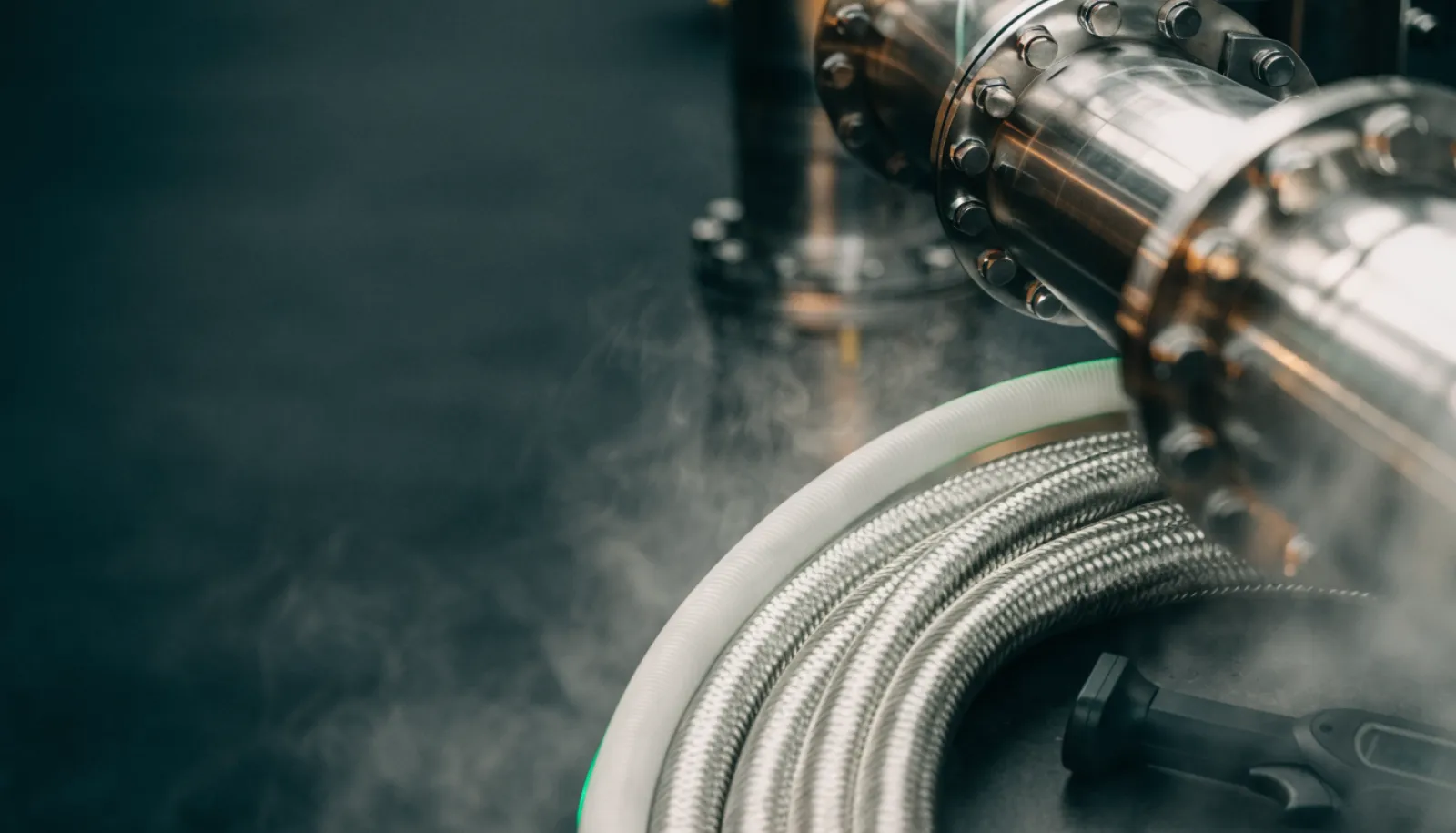
Industrial fluid transfer systems demand materials that maintain performance integrity across extreme thermal conditions. PTFE hose temperature rating continuous use parameters define the operational boundaries where fluoropolymer tubing delivers reliable service without degradation, pressure loss, or catastrophic failure. For engineers specifying chemical processing lines, pharmaceutical transfer systems, or cryogenic applications, understanding the relationship between temperature exposure and material performance determines system safety, product purity, and operational uptime.
The continuous use temperature rating differs fundamentally from short-term exposure limits. While PTFE can withstand brief excursions to temperature extremes, sustained operation at elevated or cryogenic temperatures triggers material property changes that affect pressure capacity, dimensional stability, and chemical resistance.
Continuous Temperature Range and Performance Limits
PTFE hose maintains functional performance across a continuous use range from -200°C (-328°F) to +260°C (+500°F), a thermal window unmatched by conventional elastomers or thermoplastics. At the upper boundary, virgin-grade PTFE resin begins molecular degradation above 260°C, with polymer chain scission releasing fluorinated compounds that compromise both material integrity and chemical purity.
The lower temperature boundary presents different engineering considerations. Unlike metals that become brittle or elastomers that lose flexibility at cryogenic temperatures, PTFE retains its molecular structure and mechanical properties down to -200°C. This makes PTFE tubing the preferred solution for liquid nitrogen transfer, cryogenic gas sampling, and ultra-low temperature chemical processing. The material does not exhibit the glass transition behavior typical of amorphous polymers, maintaining toughness and impact resistance throughout the cryogenic range.
Between these extremes, PTFE exhibits a transition zone around 19°C where the crystalline structure undergoes a phase change affecting dimensional stability. While this transition does not compromise chemical resistance or pressure capacity, precision applications requiring micron-level tolerance control must account for the slight volumetric expansion that occurs as the material passes through this temperature. For PTFE medical tubing applications where dimensional consistency directly impacts flow rates and dosing accuracy, maintaining stable operating temperatures above 25°C eliminates this variable.
Thermal cycling—repeated heating and cooling through the operational range—introduces additional performance considerations. Each thermal cycle induces microscopic stress within the PTFE matrix, particularly at connection points and areas of mechanical constraint. Applications involving frequent temperature swings benefit from PTFE stainless steel braided hose construction, where the external reinforcement constrains thermal expansion and prevents cumulative dimensional drift.
Pressure Derating at Elevated Temperatures
The relationship between temperature and pressure capacity in PTFE hose follows a non-linear derating curve that reflects the material's thermoplastic behavior. A standard 6.35mm (1/4") OD tube with 0.89mm wall thickness typically carries a maximum working pressure of 20.7 bar (300 PSI) at 22°C (72°F). As operating temperature increases to 204°C (400°F), that same tube's safe working pressure drops to approximately 5.2 bar (75 PSI)—a 75% reduction in pressure capacity. This dramatic derating occurs because PTFE's tensile strength and creep resistance decline as molecular chain mobility increases with temperature.
The derating phenomenon accelerates above 150°C, where PTFE transitions from a semi-rigid solid to a more viscoelastic state. Engineers must apply temperature-specific safety factors when calculating working pressure for elevated temperature service. Industry practice establishes working pressure at 25% of burst pressure at room temperature, but elevated temperature applications often require reducing this to 15-20% of the temperature-adjusted burst value to account for accelerated creep and stress relaxation.
Pressure derating calculations must consider both steady-state conditions and transient pressure spikes. A system operating at 10 bar continuous pressure with occasional surges to 15 bar requires sizing based on the peak pressure, not the average. The combination of elevated temperature and pressure cycling creates the most demanding service conditions, as each pressure pulse at high temperature propagates microscopic cracks and accelerates fatigue failure.
Wall thickness selection directly impacts pressure capacity across the temperature range. Increasing wall thickness from 0.89mm to 1.65mm on the same 6.35mm OD tube approximately doubles the pressure rating at any given temperature. However, thicker walls reduce flexibility and increase minimum bend radius, creating installation challenges in confined spaces.
Reinforced PTFE hose construction fundamentally alters the pressure-temperature relationship. SS304 or SS316 stainless steel braiding over the PTFE core provides mechanical support that maintains pressure capacity at elevated temperatures. A braided hose assembly rated for 250 bar at room temperature typically maintains 150-175 bar capacity at 200°C—significantly outperforming unreinforced tube. The metal braid constrains radial expansion under pressure, reducing stress on the PTFE liner and extending service life in demanding thermal environments.
Material Selection: Virgin PTFE vs. Alternatives
Virgin-grade PTFE resin manufactured from unprocessed polymer delivers the highest performance across the full temperature range. The molecular weight distribution, crystallinity, and absence of contaminants in virgin material ensure consistent mechanical properties and chemical resistance throughout the rated temperature envelope. Reprocessed or recycled PTFE contains degraded polymer chains, residual processing aids, and potential contamination that compromise both thermal stability and chemical purity—critical factors in pharmaceutical, semiconductor, and food processing applications.
Material crystallinity—the degree of ordered molecular structure within the polymer—directly influences thermal performance. High-crystallinity virgin PTFE (typically 55-65% crystalline) exhibits superior tensile strength, lower creep rates, and better dimensional stability at elevated temperatures compared to lower-crystallinity grades. The paste extrusion process used to manufacture precision PTFE tubes allows control of crystallinity through processing parameters, enabling optimization for specific thermal service conditions.
Alternative fluoropolymers offer different thermal performance characteristics. FEP (fluorinated ethylene propylene) provides a continuous use rating to 200°C with superior flexibility and optical clarity compared to PTFE. PFA (perfluoroalkoxy) extends the upper temperature limit to 260°C while offering melt-processability that enables complex geometries impossible with paste-extruded PTFE. However, both alternatives carry significantly higher material costs—typically 2-3× the price of virgin PTFE tubing.
For applications requiring enhanced thermal conductivity or electrostatic dissipation, modified PTFE compounds incorporate fillers that alter baseline thermal properties. Carbon-filled conductive PTFE hoses provide static discharge protection essential in volatile chemical transfer, but the carbon filler reduces maximum continuous use temperature to approximately 240°C due to oxidation concerns.
Chemical Compatibility and Temperature Interaction
Chemical resistance and temperature form an interdependent relationship in PTFE hose performance. While PTFE exhibits near-universal chemical compatibility at room temperature—resisting concentrated acids, organic solvents, and oxidizing agents—elevated temperatures can activate chemical interactions that remain dormant under ambient conditions. Concentrated sulfuric acid, for example, shows no effect on PTFE at 20°C but begins attacking the polymer above 180°C, causing surface degradation and strength loss.
The temperature-chemistry interaction follows Arrhenius kinetics: reaction rates approximately double for every 10°C temperature increase. This exponential relationship means a chemical showing minimal interaction at 100°C may cause rapid degradation at 200°C. Engineers must consult temperature-specific chemical resistance data rather than assuming room-temperature compatibility extends across the full thermal range.
Permeation—the molecular-level penetration of chemicals through the PTFE matrix—accelerates dramatically with temperature. Small molecules like hydrogen, helium, and methane permeate PTFE even at room temperature, but permeation rates increase exponentially above 150°C. Applications requiring absolute containment of volatile or toxic compounds must account for temperature-dependent permeation when calculating emission rates and secondary containment requirements.
Thermal cycling in the presence of aggressive chemicals creates particularly demanding service conditions. Each heating cycle increases molecular mobility, allowing deeper chemical penetration into the PTFE matrix. Subsequent cooling traps these molecules within the polymer structure, causing internal stress and potential cracking. Systems handling concentrated acids or strong oxidizers at varying temperatures benefit from periodic inspection protocols that detect early-stage chemical attack before catastrophic failure occurs.
Specification and Application Verification
Proper specification of PTFE hose for continuous high-temperature service requires documenting six critical parameters: continuous operating temperature, maximum excursion temperature, working pressure at operating temperature, chemical exposure profile, thermal cycling frequency, and required service life. This specification framework enables manufacturers to recommend appropriate tube dimensions, wall thickness, reinforcement options, and material grades that meet application demands with adequate safety margins.
Industry standards provide specification guidance but require interpretation for specific applications. SAE 100R14 establishes performance requirements for PTFE hose in automotive hydraulic systems, including pressure testing at elevated temperatures. ASTM D3295 defines dimensional tolerances and physical properties for fluoropolymer tubing. SEMI F57 specifies purity requirements for semiconductor applications where trace contamination at elevated temperatures could compromise process yields.
Verification testing confirms that specified hose assemblies meet performance requirements under actual service conditions. Pressure testing at maximum operating temperature with representative process fluids validates pressure capacity and identifies potential failure modes before system commissioning. Thermal cycling tests—typically 100-1000 cycles between temperature extremes—reveal dimensional instability, connection leakage, or premature aging that might not appear in steady-state testing.
Installation practices significantly impact thermal performance in field service. Inadequate support spacing allows excessive hose movement during thermal expansion, concentrating stress at connection points. Insufficient bend radius creates localized strain that accelerates failure at elevated temperatures. Improper torque on compression fittings either crushes the PTFE tube (over-torque) or allows leakage as thermal cycling loosens the connection (under-torque). The PTFE tube flexible hose guide provides installation specifications that preserve thermal performance throughout the rated service life.
Quality documentation from certified manufacturers provides traceability essential for critical applications. Material certifications confirming virgin-grade resin, dimensional inspection reports verifying tolerances, and pressure test records demonstrating performance at rated temperatures enable regulatory compliance in pharmaceutical, food processing, and semiconductor manufacturing. ISO 9001:2015 certification ensures manufacturing processes maintain consistent quality. The about Advanced Fluro page details manufacturing capabilities and quality systems supporting high-reliability thermal applications, while the PTFE products portfolio provides material certifications and performance data enabling evidence-based material selection.
Conclusion
PTFE hose temperature rating continuous use parameters define the operational envelope where fluoropolymer tubing delivers reliable chemical transfer performance. The -200°C to +260°C continuous rating, combined with near-universal chemical resistance, positions PTFE as the material of choice for demanding thermal applications across chemical processing, pharmaceutical manufacturing, and industrial fluid systems.
Pressure derating at elevated temperatures represents the most critical specification consideration, with working pressure declining 70-80% as temperature approaches the upper rating limit. Engineers must apply temperature-specific safety factors and consider reinforced hose construction for applications combining high pressure and elevated temperature. Material selection between virgin PTFE, alternative fluoropolymers, and modified compounds depends on the specific thermal profile, chemical exposure, and performance requirements of each application.
The interdependence of chemical compatibility and temperature demands application-specific verification rather than reliance on room-temperature resistance data. Proper installation practices and quality documentation from certified manufacturers ensure that specified thermal performance translates to reliable field service throughout the intended operational life.

Article by
AFTubes Team
Savio Pereira is a Chemical Engineer who has held leadership roles in companies like IBM. A passionate problem solver who thrives at finding solutions to engineering and business problems alike using simple innovative ideas. He believes in doing things differently rather than doing different things. His vision is to make Advanced Fluro (P) Ltd the most valuable company in the fluouro polymer industry.