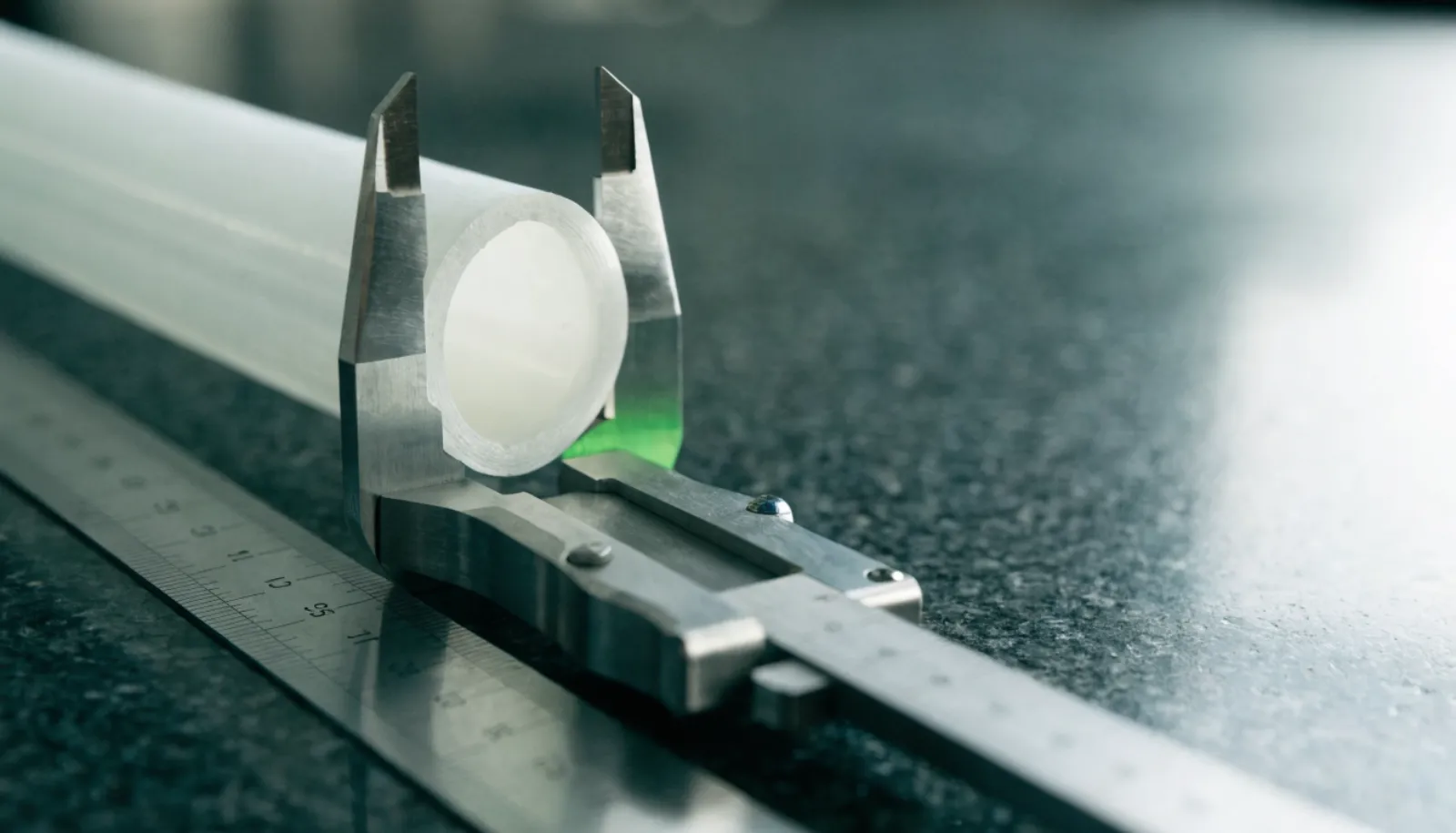
Precision tolerance PTFE hose manufacturing sits at the intersection of fluoropolymer chemistry and exacting engineering standards. For engineers specifying fluid transfer systems in chemical processing, pharmaceutical production, semiconductor fabrication, and high-pressure industrial applications, understanding manufacturing capabilities and performance limits prevents catastrophic failures, contamination events, and costly downtime. This guide examines the technical parameters that define precision tolerance PTFE hose manufacturing—from temperature derating factors and chemical compatibility to achievable dimensional tolerances and quality control protocols that separate specification-grade products from commodity alternatives.
Temperature & Pressure Performance with Derating
PTFE hose operates across an exceptional temperature range from -200°C to +260°C, maintaining flexibility and sealing integrity at cryogenic conditions while resisting thermal degradation at continuous elevated temperatures. The relationship between temperature and pressure rating is non-linear and demands careful engineering analysis. A standard 6.35mm OD PTFE tube with 0.89mm wall thickness typically carries a maximum working pressure of approximately 2.07 MPa at 22°C, but this rating decreases substantially as operating temperature increases due to the thermoplastic behavior of fluoropolymers.
The pressure derating phenomenon occurs because PTFE's tensile strength and creep resistance decline as molecular chain mobility increases with temperature. A tube rated for 2.07 MPa at room temperature may only safely handle 0.52 MPa at 204°C—a 75% reduction in allowable working pressure. This derating is not linear; the most significant strength loss occurs between 150°C and 230°C. Engineers must apply manufacturer-specific derating curves rather than simple percentage reductions, as wall thickness, reinforcement configuration, and resin grade all influence the temperature-pressure relationship.
At cryogenic temperatures, PTFE exhibits counterintuitive behavior compared to most engineering plastics. Rather than becoming brittle, PTFE maintains toughness and impact resistance down to -270°C, making it suitable for liquid nitrogen, liquid helium, and cryogenic gas transfer applications. The material's coefficient of thermal expansion remains manageable across this range, though designers must account for approximately 10% linear contraction when cooling from ambient to -196°C.
Pressure ratings for braided PTFE hose assemblies differ significantly from unreinforced tubing. SS316 stainless steel braiding typically increases burst pressure by 300-400% compared to bare PTFE tube, allowing working pressures up to 20.7 MPa in smaller diameters. The braid does not prevent PTFE creep but constrains radial expansion, maintaining dimensional stability under sustained pressure. For steam service and other high-temperature applications, the braid material selection becomes critical—SS304 suffices for temperatures below 200°C, while SS316 or Inconel braiding is specified for continuous service above 230°C where oxidation resistance becomes paramount.
Chemical Compatibility & Material Selection
PTFE demonstrates near-universal chemical resistance, showing complete compatibility with concentrated hydrofluoric acid, fuming nitric acid, chlorine trifluoride, and aggressive organic solvents that rapidly degrade elastomers and most engineering plastics. This exceptional inertness stems from the strong carbon-fluorine bonds in the polymer backbone. However, precision tolerance PTFE hose manufacturing requires understanding the specific exceptions and conditional compatibility scenarios that determine material selection for critical applications.
The primary chemical incompatibilities for PTFE include elemental fluorine and chlorine trifluoride at elevated temperatures, molten alkali metals (sodium, potassium), and molten sodium hydroxide above 300°C. These aggressive species can abstract fluorine atoms from the polymer chain, causing degradation. For applications involving these edge-case chemicals, FEP or PFA tubing may offer superior performance due to their modified polymer structures.
Temperature significantly influences chemical compatibility ratings. PTFE that shows A-rated (excellent) compatibility with 98% sulfuric acid at 20°C may exhibit B-rated (good) or C-rated (fair) performance at 150°C due to increased permeation rates and potential for stress cracking under combined chemical-thermal loading. Procurement specifications must therefore define both the chemical exposure and the operating temperature range.
Virgin-grade PTFE resin selection directly impacts chemical resistance in precision applications. Reprocessed or reclaimed PTFE contains residual contaminants, degraded polymer chains, and reduced crystallinity that increase permeation rates and decrease resistance to aggressive chemicals. The difference becomes critical in ultrapure water systems, where ionic contamination from substandard PTFE can exceed 10 ppb, versus less than 1 ppb for semiconductor-grade virgin PTFE conforming to SEMI F57 standards. Material certificates tracing resin lot numbers back to primary fluoropolymer manufacturers provide the only reliable verification of virgin-grade material in precision tolerance PTFE hose manufacturing.
Permeation represents a distinct phenomenon from chemical attack—even when PTFE shows no visible degradation, small molecules can diffuse through the polymer matrix. Hydrogen, helium, and other light gases exhibit measurable permeation rates through PTFE walls, with permeability coefficients increasing exponentially with temperature. Conductive carbon-filled PTFE formulations typically show 15-25% higher permeation rates than unfilled PTFE due to the disruption of crystalline domains, a trade-off that must be evaluated against electrostatic discharge protection requirements in volatile media transfer.
Precision Tolerances & Manufacturing Standards
Precision tolerance PTFE hose manufacturing achieves dimensional control that distinguishes specification-grade products from commodity tubing. For medical device and semiconductor applications, inner diameter and outer diameter tolerances of ±0.01mm (10 microns) or tighter are routinely specified and verified through statistical process control. These micron-level tolerances demand paste extrusion processes operating under precisely controlled temperature, pressure, and die geometry parameters, combined with post-extrusion sizing and inspection protocols that reject non-conforming product before it reaches critical applications.
The paste extrusion process forms the foundation of precision PTFE tube manufacturing. PTFE resin powder is blended with hydrocarbon lubricant (typically naphtha or kerosene) to create a paste-like consistency, then forced through precision-ground dies under pressures exceeding 6.9 MPa. Die design determines the initial tube dimensions, but the final precision results from controlled lubricant removal, sintering temperature profiles, and post-sinter sizing operations. Wall thickness uniformity—critical for consistent pressure ratings and predictable performance—depends on maintaining constant paste viscosity and extrusion pressure throughout production runs.
ISO 9001:2015 certification provides the quality management framework for precision tolerance PTFE hose manufacturing, but application-specific standards define the actual performance requirements. SAE 100R14 specifies dimensional tolerances, pressure testing protocols, and marking requirements for automotive hydraulic PTFE hose assemblies. ASTM D3295 establishes standard specifications for PTFE resin molded basic shapes and fluoropolymer tubing, including test methods for dimensional verification, tensile properties, and specific gravity that confirm virgin-grade material. SEMI F57 defines contamination limits and purity requirements for fluoropolymer components in semiconductor manufacturing, mandating total organic carbon levels below 1 ppm and ionic contamination below specified thresholds.
Tolerance stack-up analysis becomes critical when PTFE tubing interfaces with precision fittings, valves, or instrumentation. A tube specified with ±0.05mm OD tolerance mating to a compression fitting with ±0.08mm bore tolerance creates a potential clearance variation of 0.26mm—sufficient to cause leakage or require excessive ferrule compression that damages the PTFE. Precision engineering applications therefore specify bilateral tolerances (e.g., +0.00/-0.05mm) rather than symmetric tolerances, ensuring interference fits remain within acceptable ranges across the full tolerance band.
Verification protocols for precision tolerance PTFE hose manufacturing include 100% dimensional inspection for critical dimensions in medical and semiconductor grades, versus statistical sampling for industrial grades. Optical comparators, laser micrometers, and coordinate measuring machines provide non-contact measurement of ID, OD, wall thickness, and ovality at multiple points along tube length. Wall thickness uniformity is particularly critical—a tube with 1.0mm nominal wall but 0.15mm variation between minimum and maximum thickness will fail at the thin section when pressurized, despite meeting average wall thickness specifications.
Sizing: ID, OD, Wall Thickness & Pressure Ratings
Selecting the correct PTFE hose dimensions requires balancing flow requirements, pressure ratings, flexibility, and installation constraints. Inner diameter determines flow capacity and pressure drop, outer diameter defines fitting compatibility and bend radius, while wall thickness directly controls pressure rating and resistance to collapse under vacuum.
Pressure rating calculations for PTFE tubing follow the Barlow formula modified for thermoplastic materials: P = 2St/D, where P is working pressure, S is allowable stress (typically 25% of tensile strength for PTFE to account for creep), t is wall thickness, and D is mean diameter. For a 6.35mm OD tube with 0.89mm wall thickness and PTFE tensile strength of 27.6 MPa at 20°C, the calculated burst pressure approaches 8.3 MPa, but the working pressure is conservatively rated at 2.07 MPa—a 4:1 safety factor that accounts for creep, thermal cycling, and chemical exposure effects over the service life.
Wall thickness selection must consider both pressure containment and collapse resistance under vacuum. Thin-wall PTFE tubing with wall thickness less than 10% of OD offers superior flexibility and reduced material cost but becomes susceptible to collapse when subjected to vacuum or external pressure. For vacuum applications down to -0.1 MPa (-1 bar), minimum wall thickness should exceed 15% of OD, or external braiding should be specified to prevent collapse. The thin wall PTFE tubing guide provides detailed dimensional data for applications where flexibility and reduced weight outweigh pressure capacity requirements.
Bend radius specifications prevent kinking and flow restriction in installed hose assemblies. Unreinforced PTFE tubing typically requires minimum bend radius of 6-8 times the OD to prevent permanent deformation, while braided PTFE hose can tolerate bend radii of 3-4 times OD due to the structural support from the braid. Tighter bends cause ovality—the tube cross-section deforms from circular to elliptical, reducing flow area and creating stress concentration points that accelerate fatigue failure under pressure cycling. For applications requiring tight routing in confined spaces, convoluted PTFE hose offers superior flexibility with bend radii approaching 2 times OD.
Flow capacity and pressure drop calculations for PTFE tubing follow standard fluid mechanics principles, with the Darcy-Weisbach equation modified for the exceptionally low friction coefficient of PTFE (0.05-0.08, compared to 0.4-0.5 for steel). This low friction reduces pressure drop by 60-70% compared to metal tubing of equivalent diameter, allowing smaller tube sizes for given flow rates or reduced pumping energy for fixed tube dimensions.
Virgin vs. Reprocessed PTFE & Quality Control
Material purity represents the fundamental distinction between precision tolerance PTFE hose manufacturing and commodity production. Virgin-grade PTFE resin, polymerized directly from tetrafluoroethylene monomer without any recycled content, exhibits consistent molecular weight distribution, high crystallinity (typically 55-65%), and minimal contamination. Reprocessed or reclaimed PTFE, manufactured from post-industrial scrap or recycled fluoropolymer, contains degraded polymer chains, residual contaminants, and reduced crystallinity that compromise mechanical properties, chemical resistance, and dimensional stability.
The performance differences between virgin and reprocessed PTFE become quantifiable through material testing. Virgin PTFE typically exhibits tensile strength of 27.6-34.5 MPa and elongation at break of 300-400%, while reprocessed material shows 15-25% lower tensile strength and 30-40% reduced elongation. More critically, reprocessed PTFE demonstrates accelerated creep under sustained load—a tube manufactured from reprocessed resin may lose 20-30% of its pressure rating within 1000 hours under continuous pressure at 150°C, compared to less than 10% pressure loss for virgin-grade material under identical conditions.
Chemical purity verification requires analytical testing beyond visual inspection or supplier declarations. Thermogravimetric analysis (TGA) quantifies residual contaminants and degradation products, with virgin PTFE showing less than 0.1% weight loss below 500°C, while reprocessed material may exhibit 0.5-2% weight loss indicating contamination. For semiconductor and pharmaceutical applications, inductively coupled plasma mass spectrometry (ICP-MS) measures trace metal contamination, with virgin PTFE conforming to SEMI F57 showing total metallic impurities below 10 ppb, compared to 100-1000 ppb in reprocessed material.
Quality control protocols in precision tolerance PTFE hose manufacturing extend beyond dimensional inspection to include material verification, pressure testing, and performance validation. Incoming resin inspection verifies specific gravity (2.14-2.20 g/cm³ for virgin PTFE), melt flow rate, and particle size distribution before production. In-process monitoring tracks extrusion pressure, sintering temperature profiles, and dimensional parameters at multiple production stages. Final product testing includes hydrostatic pressure testing to 4× working pressure for 60 seconds minimum, visual inspection for surface defects, and dimensional verification of critical parameters. Advanced Fluro's ISO 9001:2015 certified manufacturing implements these quality protocols across all production, ensuring consistent specification-grade performance.
Traceability systems linking finished hose assemblies back to raw material lot numbers provide essential quality assurance for critical applications. Each production batch receives unique identification marking that references resin lot, extrusion date, and inspection records. For medical device and aerospace applications, regulatory requirements mandate complete material traceability with certificates of conformance documenting resin source, material properties, and dimensional verification for every production lot.
The economic pressure to substitute reprocessed PTFE for virgin-grade material in cost-sensitive applications creates risk for engineers who specify "PTFE tubing" without material grade requirements. Reprocessed PTFE costs 30-50% less than virgin-grade resin, creating incentive for manufacturers to use substandard material when specifications lack explicit virgin-grade requirements. Procurement specifications must therefore state "100% virgin PTFE resin conforming to ASTM D4894 Type I" or equivalent language, with material certificates required at delivery. The modest cost savings from reprocessed material become irrelevant when premature failure causes process downtime, contamination events, or safety incidents in chemical processing, pharmaceutical production, or other critical applications where PTFE hose performance directly impacts operational reliability.
Conclusion
Precision tolerance PTFE hose manufacturing delivers the dimensional accuracy, material purity, and performance consistency required for demanding industrial applications where failure is not acceptable. Understanding the temperature-pressure derating relationships, chemical compatibility limitations, achievable manufacturing tolerances, and critical differences between virgin and reprocessed PTFE enables engineers to specify appropriate products and avoid costly failures. The technical parameters examined here—from micron-level dimensional control to pressure rating calculations and quality verification protocols—distinguish specification-grade PTFE hose from commodity alternatives. For applications in chemical processing, pharmaceutical production, semiconductor manufacturing, and other precision industries, partnering with ISO 9001:2015 certified manufacturers who implement rigorous quality control and maintain complete material traceability ensures that PTFE hose assemblies meet specification requirements and deliver reliable long-term performance.

Article by
AFTubes Team
Savio Pereira is a Chemical Engineer who has held leadership roles in companies like IBM. A passionate problem solver who thrives at finding solutions to engineering and business problems alike using simple innovative ideas. He believes in doing things differently rather than doing different things. His vision is to make Advanced Fluro (P) Ltd the most valuable company in the fluouro polymer industry.