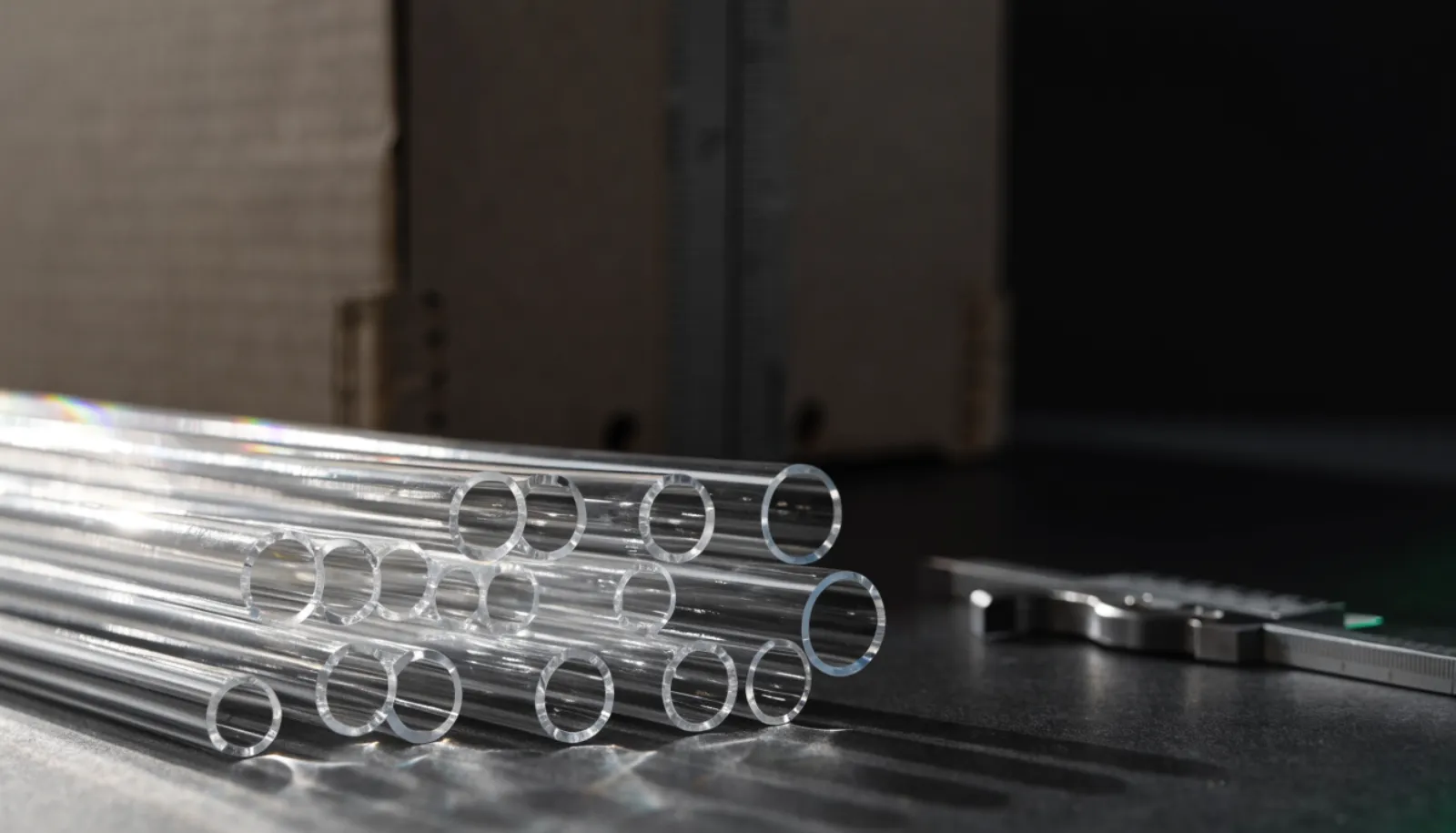
India's fluoropolymer sector has matured substantially. ISO-certified facilities now produce FEP tubing that meets international pharmaceutical, semiconductor and chemical processing standards. For procurement managers evaluating Indian suppliers, understanding virgin-grade FEP material science, performance trade-offs between fluoropolymer types, and the certification landscape determines whether a supplier can deliver consistent quality for demanding applications. Advanced Fluoro Private Limited has manufactured precision-extruded fluoropolymer tubing from its Vasai East facility since 2011, serving industries where material purity, dimensional accuracy and regulatory compliance are non-negotiable. As a leading FEP tube manufacturer India export operations, we understand the quality expectations of global markets.
Why Virgin-Grade FEP Matters for Demanding Applications
Virgin-grade fluorinated ethylene propylene resin delivers predictable performance because it contains no degraded polymer chains, contaminants or inconsistent molecular structures that characterize reprocessed material. When FEP tubing contacts pharmaceutical active ingredients, semiconductor process gases or food products, even trace impurities from recycled resin cause batch contamination, equipment fouling or regulatory non-compliance. Virgin FEP exhibits 10–15% higher tensile strength and elongation at break compared to mechanical-grade alternatives, which directly impacts pressure rating reliability and service life.
Pharmaceutical and food-contact applications require virgin-grade material because only this specification meets FDA 21 CFR 177.1550 approval for direct food contact and USP Class VI biocompatibility standards. Recycled FEP cannot achieve these certifications due to unknown contamination history and polymer degradation during previous thermal cycles. Semiconductor fabrication facilities specify virgin FEP for ultra-high-purity gas delivery because mechanical-grade tubing releases higher levels of extractables that contaminate process chambers and reduce yield rates.
The transparency advantage of FEP tubing—ranging from fully transparent to semi-transparent depending on wall thickness—enables visual flow monitoring in chemical dosing systems and pharmaceutical fill lines. This optical property remains consistent only with virgin resin; recycled material often appears cloudy or contains visible particulates that obscure flow observation. For applications where operators must verify fluid movement, bubble detection or color change indication, virgin FEP's clarity becomes a functional requirement.
Virgin-grade FEP maintains stable dielectric properties across its service temperature range, making it the preferred insulation material for high-frequency cables, sensor wiring and instrumentation in explosive atmospheres. Recycled fluoropolymer exhibits variable dielectric strength due to inconsistent molecular structure, creating potential failure points in electrical safety systems. Industries operating under ATEX or IECEx certification cannot risk using mechanical-grade tubing where electrical insulation integrity protects personnel and equipment.
Manufacturers committed to virgin-grade resin implement material traceability systems that document resin lot numbers, certificates of analysis and processing parameters for each production batch. This documentation enables root-cause analysis if field failures occur and provides the audit trail that pharmaceutical, aerospace and nuclear industries require.
FEP vs PTFE vs PFA: Material Selection for Temperature and Chemical Resistance
Temperature capability represents the primary decision factor when selecting between fluoropolymer types. PTFE operates continuously up to 260°C, PFA matches this 260°C ceiling while offering melt-processability advantages, and FEP exhibits a lower maximum operating temperature of 200°C. Applications involving steam sterilization cycles, high-temperature chemical reactions or thermal oil systems immediately eliminate FEP from consideration if process temperatures exceed 180°C with safety margin.
Chemical resistance performance separates these materials in specific environments. PTFE offers outstanding resistance to virtually all industrial solvents, acids and bases, with notable exceptions including elemental fluorine, molten sodium hydroxide and molten alkali metals. FEP matches PTFE's chemical resistance at temperatures below 150°C but shows accelerated degradation in strong oxidizers like chlorine gas and fuming nitric acid as temperature approaches its 200°C limit. PFA outperforms FEP across broader temperature and concentration ranges, demonstrating superior resistance to chlorine gas and evaporating nitric acid that would attack FEP at equivalent conditions.
PFA exhibits greater tensile strength than PTFE and superior creep resistance under continuous pressure, making it the preferred choice for high-pressure hydraulic systems and pneumatic controls where dimensional stability matters. PTFE's higher coefficient of friction compared to PFA means that sliding applications—valve stems, bearing surfaces, piston seals—perform better with PFA or require filled-PTFE formulations. FEP falls between these extremes, offering adequate mechanical performance for low-pressure fluid transfer while maintaining the transparency advantage that PTFE and PFA cannot provide.
Melt-processability determines manufacturing options and cost structures. FEP and PFA can be injection-molded, welded and thermoformed using conventional plastics processing equipment, enabling complex geometries, branch connections and custom fittings that would require expensive machining if fabricated from PTFE. PTFE's extremely high melt viscosity prevents conventional injection molding, limiting fabrication to paste extrusion, ram extrusion and compression molding techniques.
Surface finish quality affects fluid dynamics and cleaning validation in pharmaceutical and food processing systems. PFA delivers the smoothest surface finish among fluoropolymers, minimizing particle adhesion and bacterial colonization in sanitary tubing systems. This surface characteristic reduces cleaning chemical consumption and shortens clean-in-place cycle times compared to PTFE's slightly rougher extruded surface. FEP provides intermediate surface smoothness adequate for most pharmaceutical applications while maintaining cost advantages over PFA in large-diameter tubing installations. For detailed guidance on selecting between smooth-bore and convoluted configurations, see our comparison of PTFE hose types.
Export Standards, Certifications and Compliance for Indian Manufacturers
ISO 9001:2015 certification establishes the baseline quality management system that international buyers expect from Indian fluoropolymer manufacturers. This standard requires documented procedures for material receiving inspection, in-process quality control, final product testing and corrective action systems that prevent defect recurrence. Advanced Fluoro's ISO 9001:2015 certification demonstrates commitment to process control and continuous improvement that protects buyers from supply chain disruptions caused by quality failures.
SAE 100R14 specification governs PTFE hose assemblies used in hydraulic systems, defining construction requirements, pressure ratings, temperature limits and test methods that ensure consistent performance across suppliers. Indian manufacturers exporting to automotive, construction equipment and industrial machinery markets must demonstrate SAE 100R14 compliance through third-party testing and documentation. This standard specifies minimum burst pressure at four times working pressure, impulse cycle testing and compatibility with hydraulic fluids.
ASTM D3295 provides the standard specification for fluoropolymer tubing, establishing dimensional tolerances, mechanical property requirements and test methods that enable apples-to-apples comparison between suppliers. Procurement managers reference ASTM D3295 when writing specifications to ensure that quoted products meet minimum performance thresholds for tensile strength, elongation, specific gravity and dielectric strength.
SEMI F57 certification addresses ultra-high-purity fluoropolymer tubing for semiconductor manufacturing, specifying maximum allowable levels of extractable metallic and organic contaminants that could compromise wafer fabrication processes. This standard requires rigorous cleaning protocols, contamination-free packaging and analytical testing that quantifies extractables in parts-per-billion ranges. High-purity PFA tubing meeting SEMI F57 requirements commands premium pricing because the manufacturing infrastructure and quality control costs significantly exceed standard industrial-grade production.
FDA 21 CFR 177.1550 approval for fluoropolymer resin in food-contact applications requires that manufacturers use only virgin-grade material from approved resin suppliers and maintain documentation proving material traceability from resin lot to finished product. Indian exporters serving food processing, pharmaceutical and medical device markets must implement material segregation systems that prevent cross-contamination between virgin and mechanical-grade production runs.
Export documentation requirements vary by destination market but typically include commercial invoice, packing list, certificate of origin, material safety data sheet and third-party inspection certificates. European Union buyers often require REACH compliance documentation confirming that fluoropolymer products do not contain substances of very high concern above threshold concentrations.
Custom FEP Tube Specifications: Pressure Ratings, Tolerances and Dimensions
Pressure rating calculations for FEP tubing depend on wall thickness, inside diameter, temperature and safety factor requirements that vary by industry and application risk level. A 6mm ID FEP tube with 1mm wall thickness typically handles 20–25 bar continuous pressure at 20°C, while the same tube at 150°C might be derated to 12–15 bar due to reduced material strength at elevated temperature. Chemical processing applications often specify 4:1 safety factors, reducing working pressure to one-quarter of calculated burst pressure to account for pressure spikes, chemical attack and long-term creep.
Standard industrial-grade tubing typically maintains ±0.1mm tolerance on inside diameter for sizes below 10mm, with tolerance bands widening to ±0.15mm for larger diameters. Wall thickness tolerance commonly runs ±10% of nominal wall, meaning a 1mm wall specification could measure between 0.9mm and 1.1mm within acceptable limits. Pharmaceutical and semiconductor applications often require tighter tolerances—±0.05mm on ID and ±5% on wall thickness—to ensure consistent flow characteristics and precise chemical dosing. These precision specifications increase manufacturing cost by 20–30% due to slower extrusion speeds, increased scrap rates and more frequent dimensional verification during production.
Ovality—the difference between maximum and minimum diameter in any cross-section—affects sealing performance in compression fittings and push-to-connect assemblies. Standard FEP tubing specifications limit ovality to 5% of nominal outside diameter, while precision applications may require 2% maximum ovality to ensure reliable sealing without excessive compression force. Tubing with excessive ovality causes uneven stress distribution in fittings, leading to premature seal failure or stress cracking.
Concentricity—the relationship between inside and outside diameter centers—determines wall thickness uniformity around the tube circumference. Precision FEP tubing maintains concentricity within 10% of wall thickness, meaning a tube with 1mm nominal wall would show maximum wall variation of 0.1mm between thinnest and thickest points. Applications involving repeated flexing or high-pressure pulsation require tighter concentricity control because eccentric wall thickness creates stress concentration points that initiate fatigue cracks.
Static-dissipative and conductive FEP formulations address electrostatic discharge risks in flammable vapor environments and electronics manufacturing. Standard FEP exhibits high electrical resistivity that allows static charge accumulation during fluid flow, creating ignition sources in explosive atmospheres. Conductive FEP incorporates carbon or metal additives that reduce surface resistivity to 10⁴–10⁶ ohms per square, enabling static charge dissipation while maintaining chemical resistance. These specialty formulations cost 40–60% more than standard FEP but eliminate the need for external grounding systems in hazardous locations. For detailed technical specifications on conductive variants, see our guide to conductive PTFE hoses for electrostatic safety.
Industry-Specific Solutions: Pharmaceutical, Chemical Processing and Oil & Gas
Pharmaceutical manufacturing demands FEP tubing that meets stringent purity requirements, withstands repeated steam sterilization cycles and maintains dimensional stability during clean-in-place operations. Single-use bioreactor systems use FEP tubing for media transfer, sampling lines and inoculation connections where transparency enables visual verification of fluid movement and bubble detection. The tubing must survive 121°C autoclave cycles without dimensional change, chemical attack from cleaning agents including sodium hydroxide and phosphoric acid, and mechanical stress from repeated connection and disconnection. Our medical tubing specifications provide additional context for pharmaceutical applications.
Chemical processing plants specify FEP tubing for corrosive chemical transfer, sampling systems and analytical instrument connections where PTFE's higher temperature capability is unnecessary and FEP's transparency provides operational advantages. Chlor-alkali facilities use FEP tubing for chlorine gas sampling and sodium hypochlorite transfer at concentrations up to 15% and temperatures below 60°C. The tubing resists chlorine's oxidative attack while allowing visual confirmation of flow and early detection of crystallization or precipitation.
Semiconductor fabrication facilities require ultra-high-purity FEP tubing for specialty gas delivery, chemical vapor deposition precursor lines and wet chemical distribution systems where metallic and organic contamination must remain below parts-per-billion levels. SEMI F57-compliant FEP tubing undergoes rigorous cleaning protocols including solvent washing, high-temperature baking and cleanroom packaging that prevent contamination introduction during installation. The tubing connects gas cabinets to process tools, delivering silane, ammonia, nitrogen trifluoride and other reactive gases at pressures up to 100 bar while maintaining leak-tight performance and dimensional stability.
Oil and gas applications use FEP tubing for hydraulic control lines, chemical injection systems and instrumentation connections in offshore platforms and subsea installations where corrosion resistance and pressure capability are critical. Hydraulic control systems for subsea blowout preventers require tubing that maintains flexibility at 4°C seawater temperature, resists hydrogen sulfide and carbon dioxide attack, and handles 350 bar hydraulic pressure without creep or dimensional change over 20-year service life. For comparison of reinforced configurations, see our analysis of stock versus custom braided hose options.
How to Choose the Right FEP Tube Manufacturer in India
Evaluate manufacturing capabilities by requesting dimensional inspection reports, pressure test data and material certificates of analysis that demonstrate process control and quality consistency. Manufacturers with in-house testing laboratories can provide lot-specific data for tensile strength, elongation, specific gravity and dielectric strength that verify material properties match specification requirements.
Verify certification authenticity through direct contact with issuing bodies or review of certificate numbers on ISO, FDA and industry standard databases. Request current ISO 9001:2015 certificates with scope statements confirming fluoropolymer tubing manufacturing, not generic trading or distribution activities. For pharmaceutical and food-contact applications, verify that FDA 21 CFR 177.1550 compliance applies to the specific resin lot used in your order.
Assess technical support capabilities by discussing your application requirements with the manufacturer's engineering team and evaluating their understanding of temperature limits, chemical compatibility and pressure rating calculations. Manufacturers with application engineering resources can recommend wall thickness adjustments, suggest alternative materials for borderline temperature conditions and provide installation guidance that prevents premature failures.
Compare total cost of ownership rather than unit price alone by factoring in material quality, dimensional consistency, certification compliance and technical support value. The lowest-price supplier often uses recycled resin, maintains loose tolerances and provides minimal documentation, creating hidden costs in quality failures, regulatory non-compliance and engineering time spent resolving supply issues. Mid-tier pricing from ISO-certified FEP tube manufacturer India export operations typically delivers better value through reduced scrap rates, predictable performance and compliance documentation that satisfies audit requirements. For additional guidance on material selection, explore our complete product range and technical resources.
Establish quality agreements that define acceptance criteria, inspection procedures, non-conformance resolution processes and documentation requirements before placing orders. Include requirements for dimensional inspection reports, material certificates, pressure test data and any industry-specific certifications relevant to your application.
About Advanced Fluoro Private Limited Since 2011, Advanced Fluoro Private Limited has manufactured precision-extruded PTFE, FEP and PFA tubing from virgin-grade fluoropolymer resin at our ISO 9001:2015 certified facility in Vasai East, Mumbai. We serve pharmaceutical, chemical processing, semiconductor, oil & gas and analytical instrumentation industries with custom dimensions, tight tolerances and full regulatory compliance documentation. Our engineering team provides application-specific material selection guidance and technical support throughout the product lifecycle. As a trusted FEP tube manufacturer India export partner, we deliver quality and reliability to global markets. Contact us to discuss your fluoropolymer tubing requirements and receive detailed specifications for your application.

Article by
AFTubes Team
Savio Pereira is a Chemical Engineer who has held leadership roles in companies like IBM. A passionate problem solver who thrives at finding solutions to engineering and business problems alike using simple innovative ideas. He believes in doing things differently rather than doing different things. His vision is to make Advanced Fluro (P) Ltd the most valuable company in the fluouro polymer industry.