Material Definitions and Core Differences
Polytetrafluoroethylene (PTFE), Fluorinated Ethylene Propylene (FEP), and Perfluoroalkoxy (PFA) represent three distinct fluoropolymer materials, each engineered to address specific industrial fluid transfer challenges. PTFE, the original fluoropolymer developed in 1938, consists of a fully fluorinated carbon backbone that delivers exceptional chemical inertness and thermal stability. Its extremely high melt viscosity prevents conventional injection molding, requiring specialized extrusion and sintering processes.
FEP emerged as a copolymer of tetrafluoroethylene and hexafluoropropylene, designed to retain PTFE's chemical resistance while enabling melt-processability through conventional injection molding and screw extrusion. This processing advantage allows manufacturers to produce complex shapes, welded assemblies, and heat-sealed connections. The trade-off: FEP's reduced maximum operating temperature of 200°C compared to PTFE's 260°C continuous service capability.
PFA represents the third generation of fluoropolymer development—a fully fluorinated copolymer that combines PTFE-like performance with the melt-processability of FEP. The material achieves higher service temperatures than FEP at 260°C while maintaining mechanical integrity under extreme conditions. PFA exhibits greater tensile strength than PTFE and delivers a smoother surface finish than either predecessor, making it the premium choice for high-purity applications where extractables must remain minimal.
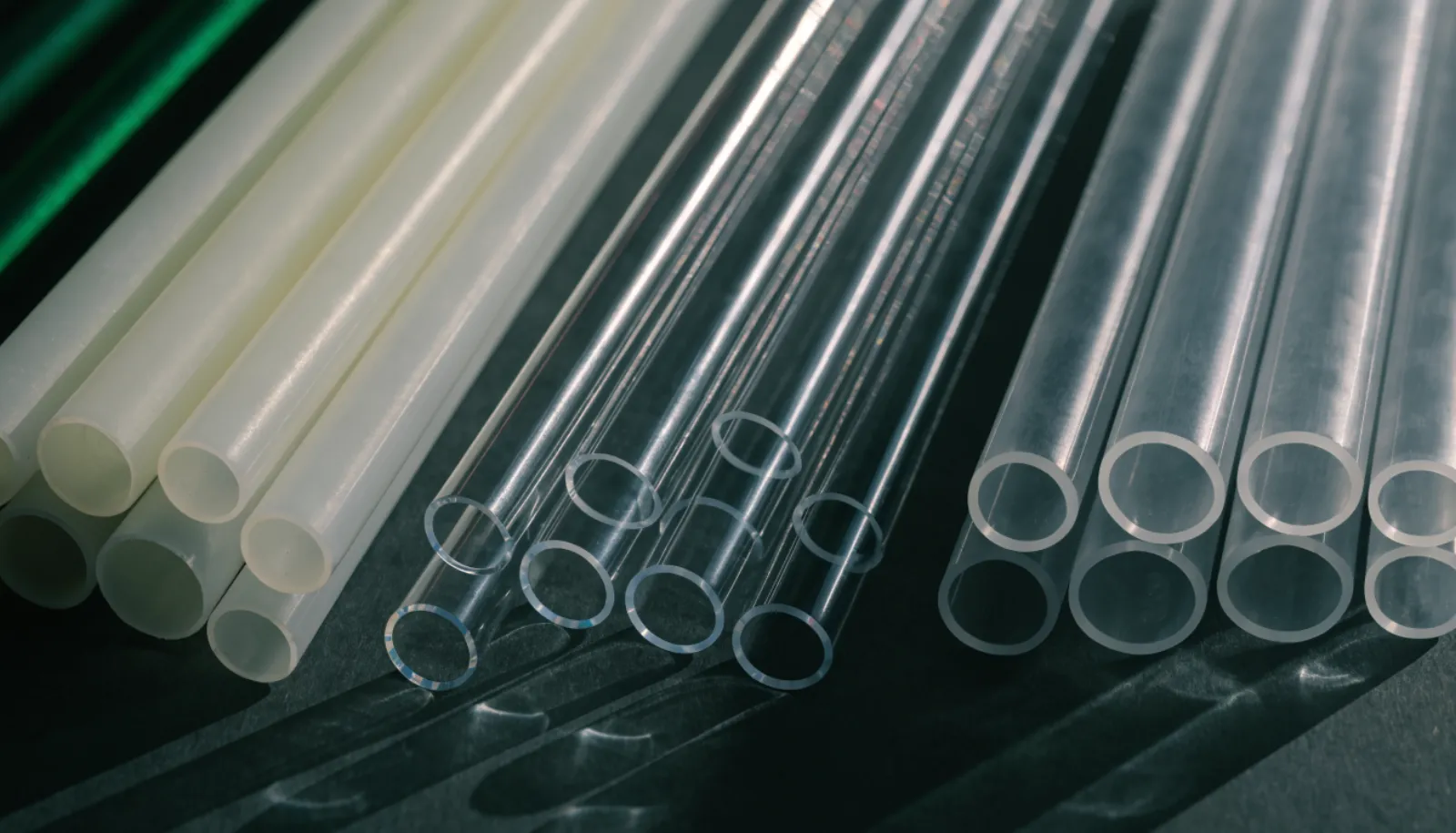
The optical properties provide immediate visual differentiation: PTFE appears completely opaque in white or colored formulations, FEP offers transparency to semi-transparency enabling visual flow monitoring, and PFA presents slight translucency. For procurement managers specifying fluid transfer systems, these physical characteristics often drive initial material selection before detailed performance analysis begins.
Temperature and Chemical Resistance Performance
Temperature capability serves as the primary differentiator when comparing ptfe vs fep vs pfa tubing differences in demanding industrial environments. PTFE operates effectively across the broadest temperature range from -200°C to +260°C continuous service, making it the standard for cryogenic applications and high-temperature chemical processing. FEP's lower maximum operating temperature of 200°C reflects its copolymer structure, which introduces slight molecular flexibility that compromises high-temperature performance while enabling melt-processability.
PFA matches PTFE's 260°C continuous service temperature while offering superior mechanical stability at elevated temperatures compared to both alternatives. The material maintains dimensional stability and pressure resistance near its maximum operating temperature, whereas PTFE exhibits increased creep and deformation under mechanical stress at temperatures above 200°C. For steam sterilization applications in pharmaceutical manufacturing, PFA tubing withstands repeated autoclave cycles at 121°C without degradation.
Chemical resistance across these fluoropolymers remains exceptional, with all three materials demonstrating inertness to virtually all industrial solvents, acids, bases, and corrosive chemicals. PTFE offers outstanding resistance with notable exceptions including fluorine gas, molten sodium hydroxide, and molten alkali metals at extreme temperatures. PFA outperforms FEP in consistent chemical resistance across broader temperature ranges and chemical concentrations, particularly when handling strong oxidizers such as chlorine gas and evaporating nitric acid.
For chemical processing plants handling concentrated sulfuric acid, hydrochloric acid, or organic solvents at elevated temperatures, PFA tubing delivers the necessary combination of chemical inertness and thermal stability. FEP serves applications requiring chemical resistance at moderate temperatures where transparency enables visual process monitoring—a capability impossible with opaque PTFE. Engineers must evaluate the specific temperature-chemical combination in their system rather than assuming equivalent performance across fluoropolymers.
Virgin-Grade vs Recycled: Quality and Compliance Impact
Virgin-grade fluoropolymer resin represents material produced directly from raw chemical feedstocks without any reprocessed content, delivering predictable and consistent performance with maximum mechanical strength, purity, and stability. Virgin PTFE exhibits 10-15% higher tensile strength and elongation at break compared to reprocessed grades, a difference that becomes critical in high-pressure applications or systems subject to vibration and mechanical stress.
Mechanical-grade PTFE, produced using reground or reprocessed material from manufacturing runs, significantly reduces material cost but introduces performance variability that disqualifies it from regulated industries. Recycled PTFE may contain contaminants from previous applications, inconsistent molecular weight distribution, and reduced chemical resistance due to partial polymer degradation during thermal reprocessing.
Virgin PTFE remains the only grade FDA-approved for contact with food, pharmaceuticals, and medical devices under 21 CFR 177.1550, while also meeting USP Class VI biocompatibility requirements for medical use. Pharmaceutical manufacturers cannot risk using recycled fluoropolymer tubing in drug manufacturing processes, as extractables from degraded polymer chains or residual contaminants could migrate into drug products and compromise patient safety.
For semiconductor manufacturing, high-purity PFA tubing certified to SEMI F-57 standards demands virgin resin with extremely low extractable levels to prevent contamination of ultra-pure chemicals and process gases. The specification limits metallic and organic extractables to parts-per-billion levels achievable only through virgin material and controlled manufacturing processes.
Procurement managers evaluating virgin versus recycled fluoropolymer tubing must consider total cost of ownership rather than initial material cost alone. While recycled PTFE may cost 30-40% less than virgin material, the risk of premature failure, regulatory non-compliance, and potential contamination incidents often outweighs the upfront savings. Advanced Fluoro Private Limited manufactures exclusively from virgin-grade fluoropolymer resin to guarantee performance consistency and compliance across all applications. Learn more about our quality standards and certifications.
Processing Capabilities and Mechanical Properties
The fundamental processing difference between PTFE, FEP, and PFA stems from their melt viscosity characteristics, which determine manufacturing methods and achievable component geometries. PTFE's extremely high melt viscosity prevents conventional injection molding, requiring paste extrusion or compression molding followed by sintering at temperatures above 327°C. This processing limitation restricts PTFE to relatively simple geometries such as straight tubing, rods, and sheets.
FEP's melt-processability through conventional injection molding and screw extrusion enables manufacturers to produce complex fittings, welded assemblies, and heat-sealed connections directly without secondary operations. The material flows at processing temperatures around 300°C, allowing formation of intricate geometries including molded elbows, tees, and custom connector configurations. For systems requiring multiple connections or custom geometries, FEP's processability often outweighs its reduced temperature capability.
PFA combines PTFE-like performance with melt-processability similar to FEP, enabling injection molding, extrusion, and welding operations while maintaining the higher temperature and chemical resistance of PTFE. The material processes at temperatures around 360°C, slightly higher than FEP, but delivers superior mechanical properties in the finished component. PFA's greater tensile strength compared to PTFE and smoother surface finish than either alternative make it the preferred choice for high-purity applications where surface roughness could harbor contaminants.
Mechanical properties vary significantly across these fluoropolymers under operating conditions. PTFE exhibits excellent flexibility and low coefficient of friction but demonstrates creep under sustained mechanical stress, particularly at temperatures above 150°C. FEP shows similar creep characteristics with slightly reduced mechanical strength compared to PTFE, while PFA delivers superior creep resistance and maintains dimensional stability under mechanical stress at elevated temperatures.
For precision-extruded tubing applications, dimensional tolerances depend on both material properties and manufacturing capabilities. PTFE tubing can achieve tight tolerances through careful extrusion control and post-extrusion sizing operations, with typical dimensional tolerances of ±0.05mm for small-diameter tubes. For detailed guidance on dimensional specifications, refer to our comprehensive PTFE tube size guide.
Application Selection Guide by Industry
Pharmaceutical manufacturing demands virgin-grade fluoropolymer tubing with documented compliance to FDA 21 CFR 177.1550 and USP Class VI biocompatibility standards. PFA tubing dominates high-purity pharmaceutical applications due to its extremely low extractables, smooth surface finish that resists bacterial adhesion, and ability to withstand repeated steam sterilization cycles at 121°C without degradation. The material's transparency enables visual inspection of fluid flow and early detection of contamination.
For pharmaceutical processes involving aggressive solvents or cleaning agents at elevated temperatures, PFA's superior chemical resistance across broader temperature ranges justifies its premium cost compared to FEP alternatives. PTFE tubing serves lower-temperature pharmaceutical applications where opacity does not hinder operations and the material's lower cost provides economic advantages. Explore our pharmaceutical-grade PTFE medical tubing solutions for detailed specifications.
Chemical processing plants handling corrosive chemicals, strong acids, or organic solvents at high temperatures typically specify PTFE tubing for its exceptional chemical resistance and maximum operating temperature of 260°C. For processes requiring visual monitoring of chemical flow or color changes, FEP tubing provides transparency while maintaining chemical resistance at temperatures up to 200°C. Understanding PTFE hose chemical resistance helps engineers match material capabilities to specific chemical environments.
Semiconductor manufacturing requires high-purity PFA tubing certified to SEMI F-57 standards for ultra-pure chemical delivery systems where even trace contamination compromises wafer yields and device performance. The specification limits metallic extractables to parts-per-billion levels and organic extractables to parts-per-million levels, achievable only through virgin-grade PFA resin and controlled manufacturing in clean-room environments.
Oil and gas applications subject tubing to extreme pressures up to 300 bar and temperature cycling from cryogenic to elevated conditions. PTFE tubing with stainless steel braiding provides the necessary pressure rating while maintaining chemical resistance to crude oil, natural gas, and production chemicals. For offshore platforms where weight reduction matters, PTFE stainless steel braided hose delivers high pressure capability with minimal weight penalty.
Food and beverage processing demands FDA-compliant virgin-grade fluoropolymer tubing that resists chemical cleaning agents while preventing migration of contaminants into consumable products. PTFE tubing dominates food-grade applications due to its non-stick properties that prevent product buildup, chemical resistance to cleaning solutions, and lower cost compared to PFA alternatives. The material withstands repeated cleaning-in-place (CIP) cycles with caustic solutions and sanitizers without degradation.
How to Choose the Right Fluoropolymer for Your System
Temperature requirements serve as the primary decision criterion when selecting between ptfe vs fep vs pfa tubing differences, as operating temperature directly determines which materials remain viable candidates. For continuous operating temperatures above 200°C, PTFE or PFA represent the only suitable options, immediately eliminating FEP from consideration. Applications requiring transparency for visual flow monitoring or color verification narrow the selection to FEP or PFA, as PTFE's opacity prevents visual inspection.
Chemical compatibility verification requires matching the specific chemicals, concentrations, and temperatures in your system against published resistance data for each fluoropolymer candidate. While all three materials demonstrate exceptional chemical resistance, PFA outperforms FEP when handling strong oxidizers or aggressive chemicals at elevated temperatures. Engineers should request chemical compatibility confirmation from tubing manufacturers rather than relying solely on generic resistance charts.
Regulatory compliance requirements immediately disqualify certain material grades and mandate specific certifications based on industry and application. Pharmaceutical, medical device, and food processing applications require virgin-grade material with FDA 21 CFR 177.1550 compliance and full traceability documentation. Semiconductor manufacturing demands SEMI F-57 certified high-purity PFA with documented extractables testing.
Pressure rating and mechanical stress considerations influence material selection when systems operate at elevated pressures or experience vibration and mechanical loading. PTFE's creep characteristics under sustained pressure loading may require reinforcement through stainless steel braiding for high-pressure applications, while PFA's superior mechanical properties enable higher pressure ratings without reinforcement in some configurations. Compare smooth bore versus convoluted PTFE hose options to understand how construction methods also influence performance and cost.
Total cost of ownership analysis must consider material cost, expected service life, maintenance requirements, and failure consequences rather than focusing solely on initial purchase price. PFA tubing costs 40-60% more than equivalent PTFE tubing but may deliver 2-3 times longer service life in aggressive chemical environments at elevated temperatures, resulting in lower lifecycle cost despite higher upfront investment.
Engineers should specify dimensional tolerances, pressure ratings, and temperature ranges explicitly rather than assuming standard capabilities. For applications requiring non-standard dimensions or tighter tolerances than stock offerings, early engagement with manufacturers enables design optimization and manufacturing feasibility assessment. Advanced Fluoro Private Limited provides custom dimension fluoropolymer tubing with precision extrusion capabilities to meet demanding specifications across PTFE, FEP, and PFA materials. Browse our complete product range or shop stock sizes online for immediate availability.
When selecting between ptfe vs fep vs pfa tubing differences, prioritize temperature capability first, verify chemical compatibility second, confirm regulatory compliance third, and evaluate total cost of ownership fourth. This systematic approach ensures material selection aligns with technical requirements while optimizing long-term value.

Article by
AFTubes Team
Savio Pereira is a Chemical Engineer who has held leadership roles in companies like IBM. A passionate problem solver who thrives at finding solutions to engineering and business problems alike using simple innovative ideas. He believes in doing things differently rather than doing different things. His vision is to make Advanced Fluro (P) Ltd the most valuable company in the fluouro polymer industry.