
Article by
Savio Pereira
Savio Pereira is a Chemical Engineer who has held leadership roles in companies like IBM. A passionate problem solver who thrives at finding solutions to engineering and business problems alike using simple innovative ideas. He believes in doing things differently rather than doing different things. His vision is to make Advanced Fluro (P) Ltd the most valuable company in the fluouro polymer industry.
Corrugated PTFE hose gets specified for two very different reasons, and it's worth being clear about which one applies to your application: sometimes it's chosen for the tight-radius flexibility the accordion profile provides, and sometimes it's chosen simply because someone assumed "corrugated" means "more chemical resistant." The second assumption is wrong -- the corrugated profile is a mechanical design choice, not a chemical-resistance upgrade -- and understanding the actual trade-off is what determines whether it's the right hose for a harsh-chemical application.
Key Takeaways
- Corrugated (Type B, per SAE 100R14) PTFE hose has the same chemical resistance as smooth-bore hose -- both use the same virgin PTFE inner liner.
- The corrugated profile trades some pressure rating and pressure drop for a roughly 40% tighter minimum bend radius versus smooth bore.
- For harsh chemicals specifically, fitting and braid material compatibility usually matters more than the choice between smooth and corrugated bore.
- Corrugated hose is the right call for dynamic, tight-routing, or vibration-isolation applications; smooth bore is usually better for straight or gently-routed high-pressure lines.
- Corrugation increases internal surface area, which can matter for CIP/SIP cleanability and for viscous or particulate-laden chemical transfer.
What the Corrugated Profile Actually Does
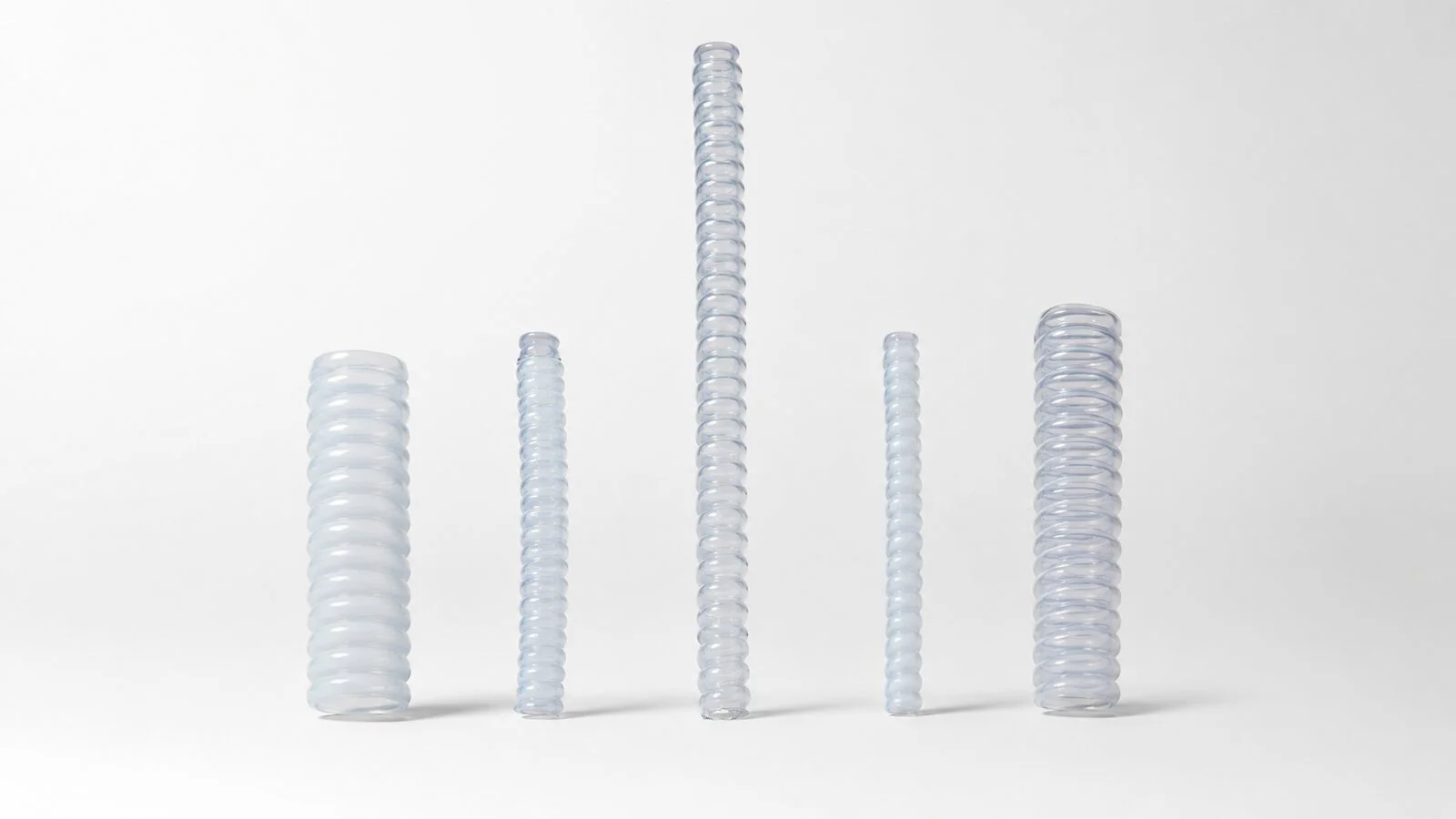
Corrugated PTFE hose uses an accordion-folded inner bore instead of a smooth cylindrical one. The folds let the hose bend through a significantly tighter radius without kinking or collapsing the flow path -- roughly 40% tighter than an equivalent smooth-bore (Type A) hose of the same dash size. That's a mechanical flexibility benefit, achieved through geometry, not through a different PTFE compound. The liner material itself -- virgin PTFE, chemically inert to nearly everything -- is identical between smooth and corrugated construction.
The Trade-Off: Pressure Rating and Pressure Drop
Because the corrugated bore isn't smooth, it introduces more turbulence and a higher pressure drop at equivalent flow rate compared to smooth bore, and the accordion geometry generally carries a lower maximum working pressure at the same dash size. For applications where pressure loss and maximum pressure rating are the priority -- long straight runs, high-pressure hydraulic circuits -- smooth bore is usually the better-performing choice.
Where Corrugated Genuinely Earns Its Place
| Application | Why Corrugated Fits |
|---|---|
| Pump inlet/outlet vibration isolation | Absorbs axial and lateral movement without transmitting vibration to rigid piping |
| Tight-radius routing in instrument panels | 40% tighter bend radius fits in confined enclosures a smooth-bore hose can't reach |
| Expansion joints for thermal movement | Flexes repeatedly under thermal cycling without fatigue failure at the bend |
| Aggressive-media semiconductor/chemical lines | Same chemical resistance as smooth bore, with flexibility for tight equipment layouts |
| Flexible gas/vapour sampling lines | Routing flexibility matters more than pressure capacity for low-pressure sampling |
Chemical Resistance: Where the Real Decision Actually Lives
For harsh-chemical transfer specifically, the bore profile is rarely the deciding factor -- fitting and braid material compatibility usually is. PTFE itself resists concentrated acids, bases, and solvents essentially regardless of bore geometry; the components that actually fail under chemical attack are typically metallic (fittings, braid wire) rather than the PTFE liner itself. SS316 fittings and braid for chloride or halide exposure, correctly specified gasket/seal materials at the fitting interface, and confirming compatibility for your specific chemical (rather than assuming "PTFE resists everything" covers the whole assembly) matter more than the smooth-vs-corrugated decision for genuinely aggressive media.
Cleanability and Surface Area
One secondary consideration worth flagging: the corrugated bore's larger internal surface area, relative to a smooth bore of the same nominal ID, can be relevant for CIP/SIP cleaning validation in pharmaceutical or food-grade applications, and for viscous or particulate-laden chemical transfer where the folds can create local low-flow zones. For high-purity or hygienic applications where this matters, it's worth discussing directly with your supplier rather than assuming corrugated and smooth bore are interchangeable beyond the bend-radius question.
Common Mistakes When Specifying Corrugated Hose for Chemicals
- Choosing corrugated because it "sounds" more chemical-resistant. Both bore types use the same PTFE liner -- corrugated is a mechanical, not chemical, upgrade.
- Not checking the derated pressure rating at your dash size. Corrugated hose's pressure capacity is genuinely lower than smooth bore at the same size -- confirm it covers your operating pressure with margin.
- Overlooking fitting material for aggressive media. The bore profile decision is often the least important chemical-compatibility variable in the whole assembly.
- Specifying corrugated for a static, straight installation. If there's no bend-radius or vibration-isolation need, smooth bore is usually the higher-performing and often more economical choice.
Advanced Fluro: What We Actually Offer
Advanced Fluro Private Limited manufactures corrugated PTFE hose from our ISO 9001:2015 certified facility in Vasai East, Mumbai:
- Corrugated (Type B) hose to SAE 100R14, SS304/SS316 braid reinforcement, roughly 40% tighter minimum bend radius versus our smooth-bore Type A range.
- Same virgin PTFE liner as our standard hose -- full chemical resistance, no compromise from the corrugated profile.
- SS304/SS316/carbon steel fittings in BSP, NPT, DIN, and flanged configurations, matched to your chemical compatibility requirements.
- Conductive-grade corrugated hose available for applications combining tight routing with electrostatic safety needs.
We supply corrugated hose for pump vibration isolation, expansion joints, semiconductor and chemical-plant tight-routing applications, and aggressive-media transfer across chemical processing, pharmaceutical, and industrial customers.
Frequently Asked Questions
Is corrugated PTFE hose more chemically resistant than smooth-bore hose?
No -- both use the same virgin PTFE inner liner and have essentially identical chemical resistance. The corrugated profile is a mechanical flexibility feature, not a chemical-resistance upgrade.
How much pressure rating do I lose by choosing corrugated over smooth bore?
It varies by dash size, but corrugated hose generally carries a meaningfully lower maximum working pressure than smooth bore at the same nominal size -- always confirm the specific derated rating for your size against your operating pressure requirement.
Can corrugated PTFE hose handle the same aggressive chemicals as smooth bore?
Yes, in terms of the PTFE liner itself. The limiting factor for harsh-chemical service is usually fitting and braid material compatibility, which is independent of the smooth-vs-corrugated bore decision.
When should I choose smooth bore instead of corrugated?
When your installation is a straight or gently-routed run, pressure rating or minimising pressure drop matters more than bend radius, or there's no vibration-isolation requirement -- smooth bore is generally the higher-performing and more economical choice in those cases.

Article by
AFTubes Team
Savio Pereira is a Chemical Engineer who has held leadership roles in companies like IBM. A passionate problem solver who thrives at finding solutions to engineering and business problems alike using simple innovative ideas. He believes in doing things differently rather than doing different things. His vision is to make Advanced Fluro (P) Ltd the most valuable company in the fluouro polymer industry.