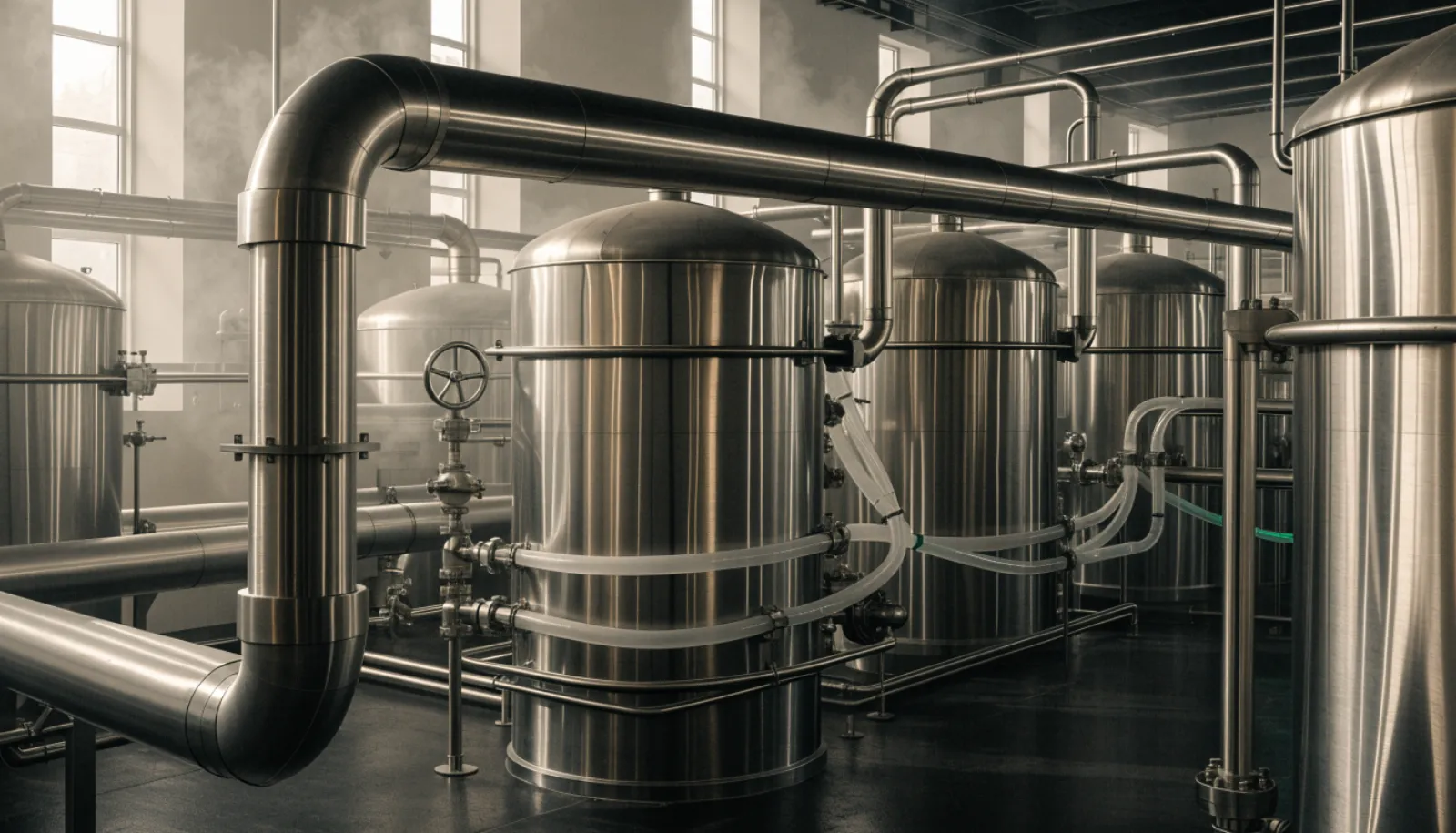
Fluoropolymer tubing and hose systems set the engineering standard for fluid transfer where conventional materials fail. Chemical processing facilities, semiconductor fabs, oil and gas operations, and automotive fuel systems need materials that resist aggressive chemicals, withstand extreme temperatures, and maintain dimensional stability under pressure. PTFE, FEP, and PFA fluoropolymers deliver these properties while meeting stringent industry standards that govern performance, purity, and safety.
Selecting the correct fluoropolymer solution requires understanding how standards like ASTM D3295, SAE 100R14, and SEMI F57 define acceptable performance parameters, how pressure and temperature specifications translate to real-world operating conditions, and which material properties align with specific application requirements. This technical guide examines the standards, specifications, and material selection criteria that procurement managers and chemical engineers use to specify chemical processing tubing fluoropolymer solutions for critical industrial applications.
ASTM D3295, SAE 100R14, and SEMI F57: Standards Explained
ASTM D3295 establishes specifications for PTFE tubing manufactured from dispersion-processed resin. The standard divides products into five groups based on sizing methodology: Group 01 uses AWG wire gauge sizes, Group 02 follows fractional inch dimensions, Group 03 specifies both inner diameter and wall thickness, Group 04 covers spiral-cut tubing, and Group 05 addresses miniature beading. Wall thickness classifications range from Class 1 light wall through Class 5 heavy wall, with Class 4 specifically designated for chemical tubing applications. Testing protocols under ASTM D3295 verify melting point, specific gravity, tensile strength, elongation, dielectric breakdown voltage, and dimensional stability—parameters that directly affect performance in chemical processing environments.
SAE 100R14 governs PTFE-lined hydraulic hose construction and performance for petroleum-based and synthetic hydraulic fluids. Type A construction consists of an extruded PTFE inner tube reinforced with a single braid of Type 303XX stainless steel wire, while Type B adds an electrically-conductive inner surface to prevent electrostatic charge buildup when transferring non-conductive fluids. The standard specifies continuous service temperature from -54°C to +204°C and intermittent service capability from -73°C to +260°C. Working pressure ratings reach 3625 PSI for smaller diameter sizes, with burst pressure typically four times the working pressure. SAE 100R14 hose meeting FDA 21 CFR 177.1550 qualifications serves pharmaceutical and food processing applications where material purity matters as much as chemical resistance.
SEMI F57 sets performance and purity requirements for high-purity polymer components in semiconductor ultrapure water and chemical distribution systems. The standard establishes extractable metal limits—iron ≤5 μg/m², nickel ≤1 μg/m², chromium ≤1 μg/m²—that prevent contamination of process chemicals and wafer surfaces. Testing protocols hold components at 85°C for seven days, measuring material detachment with a maximum allowable limit of 5 μg/m². SEMI F57-compliant tubing arrives pre-passivated and fully leached, eliminating extended deionized water flush cycles and accelerating system commissioning. Semiconductor fabs specify SEMI F57 certification for PFA, PTFE, and PVDF components in wet benches, chemical delivery systems, and point-of-use filtration where sub-parts-per-billion contamination control is mandatory.
Chemical processing plants transferring corrosive liquids at atmospheric pressure typically specify ASTM D3295 tubing, while hydraulic systems requiring pressure containment demand SAE 100R14 braided hose. Semiconductor applications where trace metal contamination affects yield rates require SEMI F57 certification regardless of pressure or temperature conditions. For more information about our PTFE products and standard compliance, visit our product pages.
Pressure, Temperature, and Chemical Resistance Specifications
Pressure ratings for chemical processing tubing fluoropolymer solutions depend on construction method and reinforcement. Unreinforced PTFE tubing under ASTM D3295 handles low-pressure applications, with working pressure determined by wall thickness class and inner diameter. A 6mm ID Class 3 standard wall tube typically operates safely to 10 bar, while Class 5 heavy wall construction extends working pressure to 25 bar. SAE 100R14 braided hose delivers substantially higher pressure capability—up to 250 bar for small diameters—because stainless steel reinforcement constrains radial expansion under internal pressure.
Temperature performance separates fluoropolymers from conventional materials. PTFE maintains mechanical properties from -200°C to +260°C, covering cryogenic liquid transfer through high-temperature chemical processing. Continuous service at 204°C presents no degradation in tensile strength or chemical resistance. FEP operates continuously to 200°C, and PFA extends the upper limit to 260°C with better creep resistance than PTFE at elevated temperatures. Cold temperature performance proves equally important—PTFE remains flexible and impact-resistant at -200°C where rubber and thermoplastic materials become brittle and crack under mechanical stress or thermal cycling.
Chemical resistance defines the primary value proposition for fluoropolymer tubing in chemical processing applications. PTFE resists virtually all industrial chemicals including concentrated sulfuric acid, hydrochloric acid, sodium hydroxide, organic solvents, oxidizers, and hydrocarbons. Only molten alkali metals, elemental fluorine, and chlorine trifluoride at elevated temperatures attack PTFE. This universal chemical resistance eliminates the material compatibility research required when specifying rubber or metal tubing, where each chemical-material combination demands verification. FEP and PFA share PTFE's chemical resistance profile while offering melt-processability advantages for complex geometries.
Application Suitability: Chemical, Oil & Gas, Semiconductor, and Automotive
Chemical processing facilities represent the largest application segment for chemical processing tubing fluoropolymer solutions. Acid and base transfer systems, solvent distribution networks, and reactor feed lines operate continuously with fluids that corrode stainless steel, dissolve rubber seals, and attack polymer linings. PTFE tubing handles concentrated sulfuric acid at elevated temperatures, transfers chlorinated solvents without swelling, and resists oxidizers that degrade alternative materials within hours. Pharmaceutical manufacturing extends these requirements with additional purity standards—USP Class VI certification, extractables testing, and documentation of virgin-grade resin sourcing.
Oil and gas operations demand materials that withstand pressures from 345 to 2070 bar while resisting corrosive production fluids, hydraulic fluids, and fuel additives. SAE 100R14 PTFE braided hose serves hydraulic control systems on offshore platforms, subsea equipment, and drilling rigs where conventional rubber hose degrades from heat, pressure cycling, and chemical exposure. Fuel transfer applications in refineries and distribution terminals specify PTFE-lined hose for gasoline, diesel, biodiesel, and alternative fuels that contain aggressive additives. The low friction coefficient of PTFE reduces pumping energy requirements in long transfer lines.
Semiconductor manufacturing imposes purity requirements that exceed chemical resistance and temperature specifications. SEMI F57-certified tubing prevents trace metal contamination that causes defects in photolithography and etching processes. Ultrapure water systems with resistivity exceeding 18 MΩ·cm require materials that contribute zero ionic contamination—PTFE and PFA meet this requirement while maintaining dimensional stability during thermal cycling. Chemical mechanical planarization slurry distribution, wet bench chemical delivery, and point-of-use filtration systems all specify SEMI F57-compliant fluoropolymer components. Pre-passivated tubing reduces system commissioning time from weeks to days by eliminating extended flush cycles. Learn more about precision manufacturing at Advanced Fluro Private Limited.
Automotive fuel systems increasingly adopt PTFE-lined hose as emission regulations tighten and alternative fuels gain market share. Ethanol-blended gasoline, biodiesel, and synthetic fuels attack conventional fuel hose materials, causing swelling, softening, and permeation that increases evaporative emissions. SAE 100R14 Type A hose provides a drop-in replacement with superior chemical resistance, temperature capability, and service life.
PTFE vs. FEP vs. PFA: Choosing the Right Fluoropolymer
PTFE delivers maximum temperature capability and universal chemical resistance but requires paste extrusion or ram extrusion manufacturing processes that limit geometric complexity. The material operates continuously to 260°C, resists all industrial chemicals except molten alkali metals and elemental fluorine, and maintains properties from cryogenic temperatures through its upper service limit. PTFE's non-stick surface prevents buildup of process residues, reducing cleaning frequency and contamination risk in pharmaceutical and food processing applications.
FEP combines 98% of PTFE's chemical resistance with melt-processability that enables complex geometries, heat welding, and transparent tubing production. Maximum continuous service temperature drops to 200°C—acceptable for most chemical processing applications but limiting for high-temperature reactor systems. FEP's optical clarity allows visual process monitoring, making it valuable for laboratory tubing, sight glasses, and applications where flow verification matters. The material heat-seals to itself and to PTFE, enabling leak-free connections without mechanical fittings.
PFA extends melt-processability to 260°C continuous service temperature, matching PTFE's thermal capability while retaining the fabrication advantages of thermoplastic processing. The material exhibits superior creep resistance compared to PTFE at elevated temperatures, maintaining dimensional stability under sustained mechanical loads. PFA's combination of properties makes it the preferred choice for semiconductor wet bench components, high-purity chemical distribution systems, and pharmaceutical single-use assemblies where complex geometries and welded connections reduce contamination risk. SEMI F57 certification is readily available for PFA tubing and fittings, supporting semiconductor applications where purity requirements are non-negotiable.
Material selection balances performance requirements against cost constraints. Chemical processing applications operating below 200°C with straight-run tubing requirements favor PTFE for its chemical resistance and cost-effectiveness. Systems requiring complex routing, transparent sections, or heat-welded connections specify FEP when temperature limits permit. High-temperature chemical processing, semiconductor ultrapure systems, and pharmaceutical applications demanding both temperature capability and weldability justify PFA's premium cost. For guidance on selecting the right fluoropolymer for your application, explore our technical blog covering material properties and application engineering.
Compliance and Quality Assurance: ISO 9001:2015 and Material Certification
ISO 9001:2015 certification establishes the quality management framework that ensures consistent product performance, traceability, and continuous improvement. The standard requires documented procedures for material receiving inspection, in-process quality control, final product testing, and non-conformance management. For chemical processing tubing fluoropolymer solutions, ISO 9001:2015 compliance means virgin-grade resin verification, dimensional inspection at defined intervals during extrusion, pressure testing of braided hose assemblies, and certificate of conformance documentation for every production lot.
Material certification documentation provides traceability from raw resin through finished product. Virgin-grade PTFE resin sourcing from qualified suppliers ensures consistent molecular weight, particle size distribution, and absence of recycled content that degrades mechanical properties. Certificates of analysis document specific gravity, melting point, and tensile properties for each resin lot. Finished tubing and hose certifications include dimensional measurements, pressure test results, and compliance statements for applicable standards—ASTM D3295, SAE 100R14, SEMI F57, FDA 21 CFR 177.1550, or USP Class VI.
Third-party testing validates manufacturer claims and provides independent verification of performance specifications. Accredited laboratories conduct chemical resistance testing per ASTM standards, pressure cycling to verify fatigue life, and extractables analysis for high-purity applications. SEMI F57 qualification requires testing at approved facilities using prescribed protocols—manufacturers cannot self-certify compliance.
Advanced Fluro Private Limited maintains ISO 9001:2015 certification and provides complete material documentation for every product shipment. Our quality management system encompasses virgin-grade resin verification, in-process dimensional inspection, pressure testing, and certificate of conformance generation. We source PTFE resin from qualified suppliers, maintain calibrated measurement equipment, and conduct internal audits to ensure continued compliance. Visit our shop to explore stock sizes with full documentation, or contact our technical team for custom solutions.
Chemical processing tubing fluoropolymer solutions deliver the chemical resistance, temperature capability, and purity required for demanding industrial applications. Understanding how ASTM D3295, SAE 100R14, and SEMI F57 standards define performance requirements enables informed material selection. Pressure, temperature, and chemical resistance specifications must align with actual operating conditions to ensure safe, reliable service. Application-specific requirements in chemical processing, oil and gas, semiconductor, and automotive sectors drive material selection between PTFE, FEP, and PFA fluoropolymers.
For technical specifications, custom fabrication capabilities, and material certifications, Advanced Fluro Private Limited offers engineering support and manufacturing expertise backed by ISO 9001:2015 quality systems. Our PTFE tubes and hoses meet international standards while delivering the dimensional accuracy and performance consistency that industrial applications demand.

Article by
AFTubes Team
Savio Pereira is a Chemical Engineer who has held leadership roles in companies like IBM. A passionate problem solver who thrives at finding solutions to engineering and business problems alike using simple innovative ideas. He believes in doing things differently rather than doing different things. His vision is to make Advanced Fluro (P) Ltd the most valuable company in the fluouro polymer industry.